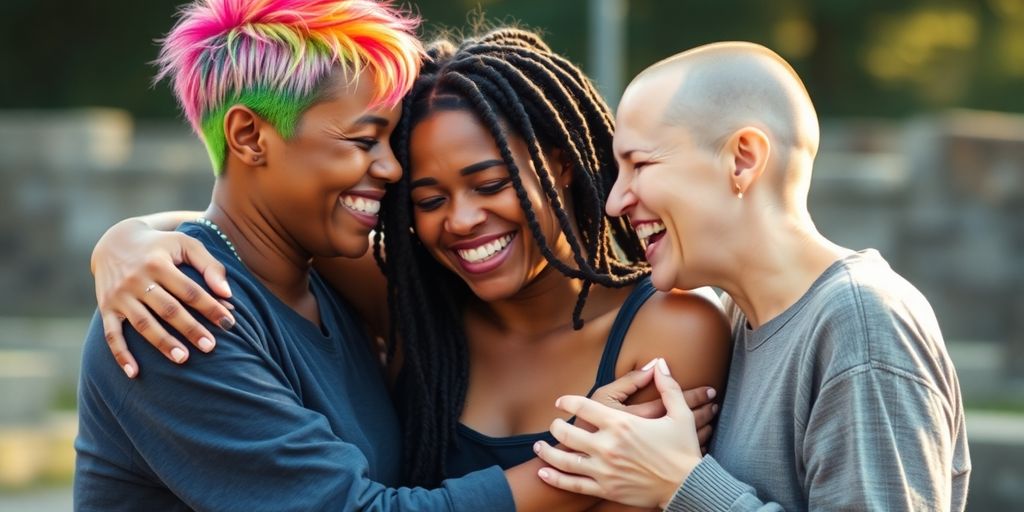
Lesbian Polyamory: Ditching the Rules & Finding Your Tribe
So, you’re curious about lesbian polyamory? It’s a pretty cool topic, and it’s all about building relationships that really fit you, not just what everyone else expects. We’re going to talk about breaking free from old ideas and finding your own community where you feel like you belong. It’s a journey of figuring things out and making connections that work for you.
Key Takeaways
- Lesbian polyamory means building relationships that don’t follow traditional rules, focusing on what works for the people involved.
- There are different ways to do polyamory, like having a main partner or just a bunch of independent connections.
- Being honest and talking things out is super important in polyamorous relationships.
- It’s good to be flexible and change your relationship rules as you go.
- Finding a group of people who get polyamory can make a big difference.
What Lesbian Polyamory Means: Breaking Stereotypes and Finding Belonging
Defining Ethical Non-Monogamy
So, what’s the deal with ethical non-monogamy (ENM)? It’s basically about having multiple romantic or sexual relationships with the knowledge and consent of everyone involved. For lesbians, this can look different than straight or even gay male ENM. It’s about creating relationships that work for you, not just following some pre-set script. It’s a conscious choice to step away from traditional monogamy and explore other ways of connecting with people. This can be a really freeing experience, but it also requires a lot of communication and honesty. Finding polyamorous lesbian groups can be a great way to learn more.
Challenging Traditional Relationship Structures
Lesbian relationships already exist outside of many traditional norms, and adding polyamory into the mix can really shake things up. It’s about questioning the assumptions we make about relationships – like the idea that one person can meet all of your needs, or that jealousy is inevitable. It’s about creating something new and authentic. Think about it: how much of what we consider ‘normal’ in relationships is actually just societal pressure? It’s interesting to consider how open relationships for lesbians can challenge these norms.
Beyond the Monogamy Orientation
Some people feel like they’re just wired for monogamy, while others feel suffocated by it. But what if it’s not so black and white? What if there’s a spectrum? Exploring polyamory and lesbian identity can be a journey of self-discovery. It’s about figuring out what feels right for you, regardless of what society tells you. It’s okay to question whether you have a “monogamy orientation” or not. The important thing is to be honest with yourself and your partners.
“Swingtowns is fun and interesting for all kinds of cats! There a plenty of friendly folks and no pushy pests. Plenty of flavors for every occasion.” -FreakyFux
Navigating the Landscape of Polyamorous Relationships

So, you’re thinking about lesbian polyamorous relationships? Or maybe you’re already in one and trying to figure things out. It can feel like you’re wandering through a forest without a map. There are different paths, and what works for one person might not work for another. Let’s talk about some common terrains you might encounter.
Understanding Hierarchical Polyamory
Hierarchical polyamory is where there are primary and secondary partners. Usually, a primary partner gets more time, energy, and commitment. It’s not necessarily about ranking who’s more important, but about the level of entanglement. For example, a couple might live together, share finances, and raise kids, while other partners have less involvement. This structure needs clear communication to avoid hurt feelings. It’s not for everyone, but it can provide a sense of security for some.
Exploring Intimate Networks
Intimate networks are less structured. Think of it like a web where everyone is connected, but there isn’t a clear hierarchy. People have multiple independent relationships without explicit rankings. It’s all about the connections between individuals. This can be great for people who want more freedom and less structure. It requires a lot of trust and communication, as things can get complicated quickly. It’s like a big, beautiful, messy family.
The Fluidity of Relationship Styles
Polyamory isn’t one-size-fits-all. What works today might not work tomorrow. Relationship styles can change over time as people grow and their needs evolve. Maybe you start with a hierarchical structure and then move towards a more network-based approach. Or maybe you find something completely different that works for you. The key is to be open to change and willing to adapt. It’s a journey, not a destination. Remember that open communication is key.
“My husband and I joined Swingtowns a couple of years ago. We are new to this lifestyle and were a little apprehensive in getting involved in something like this, but we wanted to spice up our sex life and bite the bullet. We have met some wonderful respectful people and have become friends with everyone we met.” -Needtocome
The Power of Open Communication and Honesty
In any relationship, but especially in polyamorous ones, talking openly and being honest are super important. It’s like the foundation you build everything else on. If that foundation is shaky, the whole thing can crumble. It’s not always easy, but it’s always worth it.
Building Trust Through Transparency
Transparency is key. Think of it as showing your cards. When everyone knows what’s going on, it’s easier to trust each other. This means being open about your feelings, your other relationships, and any concerns you might have. It’s about creating an environment where people feel safe enough to share, even when it’s hard. It’s not about sharing every single detail of your life, but about being honest about things that affect the relationship.
Discussing Relationship Dynamics in Depth
Talking about how your relationships work is a must. What are your expectations, your boundaries, and the things that make you feel secure? These are all things that need to be discussed, and not just once. Relationships change, people change, and your discussions need to keep up. It’s like checking in to make sure everyone is still on the same page. It can be uncomfortable, but avoiding it can lead to bigger problems down the road. Communication is the tool to use here.
Evolving Rules and Boundaries
Rules and boundaries aren’t set in stone. They should change as your relationships change. What worked last year might not work this year. It’s important to revisit them regularly and make sure they still fit. This means being willing to compromise and adjust as needed. It’s not about being rigid, but about being responsive to the needs of everyone involved.
Swingtowns is incredible, I have met many awesome couples and single females on here. I recommend this site to anyone in the lifestyle! -MrMsBullDurham
Ditching the Rules: Embracing Flexibility and Growth

It’s easy to fall into the trap of thinking polyamory needs a ton of rules to work. We’re often told that to avoid chaos and hurt feelings, we need strict guidelines. But what if we flipped that around? What if, instead of focusing on rigid structures, we embraced flexibility and allowed our relationships to evolve naturally?
Moving Beyond Rigid Structures
Think about it: so many of the ‘rules’ we create are based on monogamous ideas of ownership and control. Things like ‘veto power’ or overly detailed schedules can actually hinder genuine connection. Instead of trying to control every aspect of the relationship, we can focus on building trust and communication. It’s about creating space for each person to be themselves and for each relationship to have its own unique dynamic. It’s about defining polyamory on your own terms.
Adapting to Changing Needs
Life isn’t static, and neither are relationships. People change, needs evolve, and what worked last year might not work today. The beauty of ditching the rules is that it allows for adaptation. Maybe someone needs more space, or another person wants to explore a new connection. Instead of forcing things to fit a pre-determined mold, we can have open conversations and adjust as needed. It’s like constantly re-evaluating the map on a road trip – sometimes you need to take a detour!
The Journey of Comfort and Exploration
Embracing flexibility isn’t always easy. It requires a willingness to step outside of our comfort zones and confront our insecurities. There will be times when things feel uncertain or scary. But it’s in those moments that we have the opportunity to grow, both as individuals and as partners. It’s a journey of self-discovery and exploration, and it can lead to deeper levels of intimacy and connection than we ever thought possible.
“Wow!! This site is absolutely amazing. Me and my lady have met some fun sexy people on here and got some great feedback from other couples about our profile.” -JessnOsc77
Finding Your Tribe: Community and Support in Polyamory
It can feel like you’re on an island when exploring relationship styles outside the norm. That’s why finding a community is so important. It’s about connecting with others who understand, who share similar experiences, and who can offer support and validation.
Connecting with Like-Minded Individuals
Finding your people starts with putting yourself out there. Online forums, local meetups, and even specific polyamory workshops can be great places to start. Don’t be afraid to share your story and listen to others. You might be surprised by how many people are looking for the same connection you are. Shared experiences create strong bonds.
Sharing Insights and Experiences
One of the biggest benefits of community is the opportunity to learn from others. Polyamory isn’t a one-size-fits-all thing, and hearing how other people navigate the complexities of multiple relationships can be incredibly helpful. It’s a space to ask questions, get advice, and realize you’re not alone in facing certain challenges. Honest conversations are key.
Building a Supportive Network
Having a supportive network is crucial, especially when dealing with societal misconceptions or personal struggles. This network can be made up of other polyamorous individuals, understanding friends, or even supportive family members.
“So far it’s been a fun way to connect with like minded people. In a open, judgement free environment. Lots of people to get to know.” -StaggerinVixen86
Here are some ways to build that network:
- Attend local polyamory meetups.
- Join online forums and groups.
- Connect with other ethically non-monogamous people through social media.
- Be open and honest about your relationships with trusted friends and family.
Addressing Common Misconceptions About Polyamory

Debunking Conformity Stereotypes
It’s easy to fall into the trap of thinking polyamory is just about sex or some kind of wild free-for-all. That’s so far from the truth. Many people assume that polyamorous relationships lack structure or commitment, but that’s simply not the case. Polyamorous relationships often involve a lot of communication, negotiation, and intentionality. It’s not about avoiding commitment; it’s about defining commitment on your own terms. It’s about creating relationships that work for everyone involved, which often requires more effort than simply following traditional scripts.
Polyamory as a Valid Orientation
Is polyamory a choice, an orientation, or something else entirely? It’s a question that comes up a lot. Some people feel inherently drawn to polyamory, like it’s part of who they are. Others might discover it later in life, realizing that monogamy doesn’t quite fit. The truth is, there’s no single answer. What matters is that people are able to explore their relationship styles honestly and authentically. Understanding that polyamory can be a valid and fulfilling relationship orientation is key to dismantling prejudice. It’s about recognizing that different people have different needs and desires when it comes to love and connection.
The Importance of Empathy and Understanding
Polyamory isn’t for everyone, and that’s okay. But even if it’s not your cup of tea, it’s important to approach the topic with empathy and understanding.
“This is the best site we have found! Easy to navigate and easy to make great long lasting memories and friends!” -julwil8182
Here are some ways to show empathy:
- Listen without judgment.
- Ask questions to understand, not to criticize.
- Recognize that love is diverse.
Managing Emotions: Jealousy and Beyond
Polyamory isn’t all sunshine and roses; it involves dealing with some pretty intense emotions. Jealousy is a big one, but it’s not the only feeling that can pop up. Learning how to handle these feelings is key to making polyamory work.
Techniques for Reducing Romantic Jealousy
Jealousy can feel awful, but there are things you can do to lessen its impact. One helpful technique is to identify the root cause of your jealousy. Is it fear of abandonment? Insecurity? Once you know what’s triggering it, you can start to address it directly. Some other techniques include:
- Practicing self-care: When you feel good about yourself, jealousy is less likely to take hold.
- Challenging negative thoughts: Are your thoughts based on facts or assumptions?
- Focusing on gratitude: Appreciate what you have in your relationships.
Processing Complex Feelings
Beyond jealousy, polyamory can bring up a whole range of complex feelings: compersion (the joy of seeing your partner happy with someone else), insecurity, fear, and even grief. It’s important to acknowledge these feelings and process them in a healthy way. Journaling can be a great tool for this, as can talking to a therapist or counselor who specializes in polyamorous relationships.
Fostering Emotional Intelligence in Relationships
Emotional intelligence is all about understanding and managing your own emotions, as well as understanding and empathizing with the emotions of others. In polyamorous relationships, this is super important. Here are some ways to build emotional intelligence:
- Practice active listening: Really hear what your partners are saying, without interrupting or judging.
- Express your feelings clearly and respectfully: Use “I” statements to avoid blaming.
- Be willing to apologize and take responsibility for your actions.
- Develop empathy: Try to see things from your partners’ perspectives.
“I recommend swingtowns because it’s the first site that even as a free profile you can still connect with ppl. I have since upgraded to lifetime but me and my wife have met some really fun cpls since we started on this site so we fully recommend swingtowns.” -TheRowan
Wrapping It Up
So, we’ve talked a lot about lesbian polyamory, right? It’s not about following a bunch of old rules. It’s more about figuring out what works for you and the people you care about. You get to make your own path. It might seem a little scary at first, but finding your own way and building a group of people who get you? That’s pretty cool. It’s all about being open and honest with everyone involved. And remember, there’s no single ‘right’ way to do this. Just keep talking, keep learning, and keep being true to yourself.
Frequently Asked Questions
What is lesbian polyamory?
Lesbian polyamory is when women who love women have more than one loving, honest relationship at the same time. It’s about building connections that aren’t limited to just two people, and everyone involved knows about and agrees to it.
Is polyamory just a fancy word for cheating?
No, it’s not cheating because everyone involved knows about all the relationships and agrees to them. Honesty and open talks are super important in polyamory, so there are no secrets.
Isn’t it hard to manage so many relationships?
It can be tricky at times, just like any relationship! But polyamorous people often learn good ways to talk about their feelings, like jealousy, and work through them together. It’s about growing and understanding each other better.
Does polyamory go against normal relationship ideas?
Yes, polyamory can be a way to challenge old ideas about how relationships ‘should’ be. It lets people create their own rules and find what truly makes them happy, instead of just following what society expects.
Is polyamory just a phase or a way to avoid commitment?
Not at all! Many people find that being polyamorous helps them grow as a person, learn more about themselves, and build stronger, more honest connections with others. It’s about finding what works for you.
How do I find other polyamorous people or support?
Finding a community can be a big help. There are online groups, local meet-ups, and even books and podcasts that can connect you with other polyamorous people. Sharing stories and getting advice from others who understand can make a huge difference.
The Freedom Circle – Where Queer Love Flows and Boundaries Fade
Ready to break free from outdated norms and find your people? Discover a vibrant community where lesbian polyamory is celebrated, individuality is honored, and connection comes in every color and form. Explore what love looks like when it’s shaped by you, not by rules. Sign up for a free SwingTowns account today and start building your chosen family of joy, passion, and possibility.
“SwingTowns is awesome place to meet great people. We have met a lot nice people on here and had amazing time with several couples.” -LoveTerri77