
Polyamorous Cohabitation Success Stories: Real Homes, Real Love
Thinking about polyamory can bring up a lot of questions, especially when it comes to living together. It’s not always easy, and sometimes people worry it won’t last. But honestly, there are folks out there making it work, and they’ve got some real stories to tell. This isn’t about theoretical ideas; it’s about people building actual lives and loving each other in ways that feel right for them. We’re going to look at some of these Success Stories: Real-Life Examples of Polyamorous Cohabitation Done Well.
Key Takeaways
- Talking openly about wanting more commitment is the first step, even if it feels a bit scary.
- Financial agreements need to be worked out so everyone feels it’s fair.
- Dealing with jealousy and insecurity is a big part of polyamory, and it’s okay to talk about it.
- Sometimes, polyamory is tried because there are other problems in the relationship, which doesn’t usually end well.
- Even when relationships change or end, the people involved can learn and grow, sometimes finding a ‘monogamish’ balance.
Navigating The Early Stages Of Polyamorous Cohabitation

Thinking about moving in with more than one partner? It’s a big step, and honestly, it can feel a little daunting at first. It’s not just about finding a bigger place; it’s about merging lives, finances, and feelings in a whole new way. The key is to have these conversations before you’re knee-deep in boxes and shared grocery lists.
The Vulnerable Conversation: Expressing Desire For Deeper Commitment
This is where it all begins. You’ve got a partner, or maybe partners, and you’re feeling a pull towards something more. Maybe you’re dreaming of waking up with them every day, or perhaps you just want to share the mundane bits of life – like who’s taking out the trash. It takes guts to say, “I want this to be more.” It means being open about your needs and desires, and being ready to hear theirs too. It’s about saying, “I see a future with you, and I want to explore what that looks like, together.” This initial chat is less about logistics and more about the heart of the matter: a shared vision for a deeper connection.
Discussing The Possibility With A Long-Term Partner
If you’re already in a committed relationship and considering bringing another partner into your shared home, this conversation needs to be handled with care. It’s not a casual “Hey, what do you think about this?” It’s a serious discussion about how this might change your dynamic. You’ll want to talk about boundaries, expectations, and how you’ll both feel. It’s important to address any fears or insecurities that might pop up. Remember, this is about building something new together, not about replacing what you already have. Openness here is everything, and it might involve some back-and-forth before everyone feels comfortable. It’s a good idea to have this chat before you even start looking at apartments or houses, maybe even before you start looking at potential living spaces.
Achieving Financial Consensus Among All Parties
Money. Ugh, right? But seriously, when you’re talking about sharing a home, finances are a huge part of the puzzle. Who pays for what? How are bills split? What about shared expenses like groceries or furniture? It’s not always a simple 50/50 split, especially if incomes differ. You might need to create a system that feels fair to everyone involved. Some people use spreadsheets, others have a joint account for household expenses, and some divide costs based on income percentages. Whatever you choose, make sure everyone is on board and feels secure about the arrangement. This is a place where clear agreements can prevent a lot of future headaches.
“Great site. Met some great people. Feel secure and private and safe with the site. Definitely recommend!” -Anguslove
Here’s a quick rundown of things to consider:
- Expressing Your Needs: Be honest about what you want from cohabitation.
- Partner’s Feelings: Actively listen to your existing partner’s thoughts and concerns.
- Financial Planning: Create a budget and agree on how expenses will be shared.
- Logistics: Think about space, chores, and daily routines.
- Legalities: Consider if any legal agreements are needed, especially regarding property or children.
Building A Foundation For Long-Term Polyamorous Success
So, you’re thinking about building a polycule home. That’s a big step, and honestly, it’s not something to rush into. It takes a lot of honest talk and a willingness to really see each other, flaws and all. Open communication is the bedrock of any successful polyamorous setup. Without it, things can get messy, fast.
Open Communication As The Cornerstone Of Polyamory
This isn’t just about saying “I love you” or “How was your day?” It’s about creating a space where everyone feels safe to express their needs, fears, and desires without judgment. Think of it like this: you wouldn’t build a house without a solid foundation, right? Communication is that foundation for your poly relationships. It means being upfront about feelings, even the uncomfortable ones, and actively listening to what your partners are saying. It’s about checking in regularly, not just when there’s a problem. This kind of honest exchange helps prevent small misunderstandings from snowballing into major issues. It’s about being able to say, “Hey, I’m feeling a bit insecure about X,” and having your partner respond with empathy, not defensiveness.
Addressing Jealousy And Insecurity Head-On
Let’s be real, jealousy happens. It’s a normal human emotion, and in polyamory, it can pop up in unexpected ways. The key isn’t to pretend it doesn’t exist, but to address it. When jealousy strikes, try to figure out what’s really behind it. Is it fear of loss? Feeling neglected? Insecurity about your own worth? Once you identify the root cause, you can work through it together. This might involve more quality time with a partner, reaffirming your commitment, or simply talking it out. It’s a process, and it requires patience from everyone involved. Remember, your partners aren’t responsible for your feelings, but they can be supportive as you work through them. It’s about building resilience as a unit.
“I’m glad that SwingTowns is growing such an audience of happy, sex-positive people!” -RandySP69
The Role Of Relationship Agreements In Polyamorous Households
Think of relationship agreements as a roadmap for your polyamorous journey. They aren’t meant to be rigid rules, but rather a way to clarify expectations and boundaries among all partners. These agreements can cover anything from how you handle finances and shared living spaces to how you communicate about new partners or manage time. Having these discussions upfront can save a lot of heartache down the line. It’s a way to ensure everyone is on the same page and feels respected. You can even create a formal polyamorous relationship agreement to help guide these conversations and document your shared understanding. It’s a practical tool for building a stable and loving home together.
Real-Life Polyamorous Family Dynamics
It’s easy to think of polyamory as just a dating style, but for many, it’s a full-blown family structure. These aren’t just couples dabbling in open relationships; these are people building homes, raising kids, and sharing life’s ups and downs together. Successful poly families exist, and they’re often more stable and loving than people assume.
Raising Children in a Polyamorous Household
This is often the biggest question mark for outsiders. How do kids fare when they have more than two parental figures? The reality is, children thrive on love, security, and consistent care, regardless of the number of adults providing it. Many poly families report that having multiple adults involved means more hands for chores, more people to attend school events, and a wider support network for everyone. It’s not about having more parents, but about having a larger, more robust family unit.
- More Adult Support: Kids benefit from diverse perspectives and a larger pool of people to turn to for help or comfort.
- Shared Responsibilities: Chores and childcare duties can be distributed, potentially reducing stress on individual adults.
- Learning About Diversity: Children grow up understanding that families come in many forms, promoting acceptance.
Navigating External Perceptions and Discrimination
Let’s be honest, the world isn’t always kind to those who don’t fit the traditional mold. Polyamorous families often face confusion, judgment, and even outright discrimination. People might assume infidelity, lack of commitment, or that one partner is unaware of the others. This can be exhausting, and it often means poly families have to be more deliberate about their ‘coming out’ process than monogamous families. Legal protections are also a huge issue, especially concerning child custody and parental recognition. It’s a constant effort to educate and advocate for acceptance, even when you’re just trying to live your life.
“Swingtowns is awesome and we have no complaints. There are tremendous people and wonderful couples on here that we have had the pleasure of meeting” -wearesexy2015
The Joys of Shared Love and Responsibility
Despite the challenges, the rewards of polyamorous cohabitation can be immense. Imagine coming home to multiple people who love and support you, sharing the burdens and joys of daily life. It’s about expanding your capacity for love and connection, creating a rich tapestry of relationships. For many, it feels like an abundance of love, not a scarcity. This shared approach extends to responsibilities, making household management and child-rearing a team effort. It’s a different kind of family, but for those living it, it’s a deeply fulfilling one. You can find examples of successful poly families who are thriving.
| Aspect of Family Life | Traditional Monogamous | Polyamorous Cohabitation |
|---|---|---|
| Parental Figures | Typically Two | Three or more |
| Decision Making | Dyadic | Group consensus |
| Support Network | Extended Family/Friends | Extended Family/Friends/Metamour |
| Legal Recognition | Standard | Often Complex/Limited |
Overcoming Challenges In Polyamorous Relationships
So, you’ve decided to explore polyamory, maybe even live with multiple partners. That’s a big step! And like any big step, it comes with its own set of bumps. It’s not always sunshine and rainbows, and sometimes, things get tough. Let’s talk about some of the hurdles you might face and how people work through them.
When Polyamory Becomes A ‘Band-Aid’ For Existing Issues
Sometimes, people think opening up a relationship or moving in with more partners will magically fix problems that were already there. It’s like trying to patch a leaky roof with a sticker – it just doesn’t work long-term. If communication was shaky before, it’s likely to get worse. If trust was an issue, adding more people can really complicate things. Polyamory works best when it’s built on a solid foundation, not used to cover up cracks. Trying to use it as a quick fix for deeper relationship issues often leads to more pain for everyone involved.
The Grief Of A Partner’s Breakup With Another Lover
This one can be surprisingly difficult. When you’re in a polyamorous setup, you’re not just invested in your own relationships; you’re often connected to your partners’ other relationships too. If one of your partners goes through a breakup with someone else they love, it’s natural to feel a sense of grief or loss, even if you weren’t directly involved. It can be hard to know how to support your partner through that pain while also managing your own feelings. It requires a lot of empathy and open discussion about everyone’s emotional space.
Rebuilding Trust After Difficult Conversations
Let’s be real: polyamorous relationships, like any relationships, will have difficult conversations. Maybe it’s about boundaries, unmet needs, or even just navigating a new dynamic. Sometimes, these talks can lead to hurt feelings or misunderstandings. Rebuilding trust after these moments is key. It’s not about pretending everything is fine; it’s about acknowledging the difficulty, talking it through honestly, and actively working to show each other that you’re committed to the relationship’s health.
Here are some points to consider when facing these challenges:
- Honest Self-Reflection: Before blaming external factors, take a good look at what’s happening within yourself and your existing relationships.
- Prioritize Communication: Make time for regular check-ins, not just about the good stuff, but especially about the hard stuff.
- Seek External Support: Sometimes, talking to a therapist who understands polyamory can make a huge difference.
- Patience and Persistence: Rebuilding trust and overcoming issues takes time. Don’t expect overnight solutions.
“Swingtowns has been awesome in this lifestyle ! Finding new couples to play with and of course hang with.” -Skaggszy98
Diverse Structures Of Polyamorous Cohabitation
The Triad: One Man, Two Women
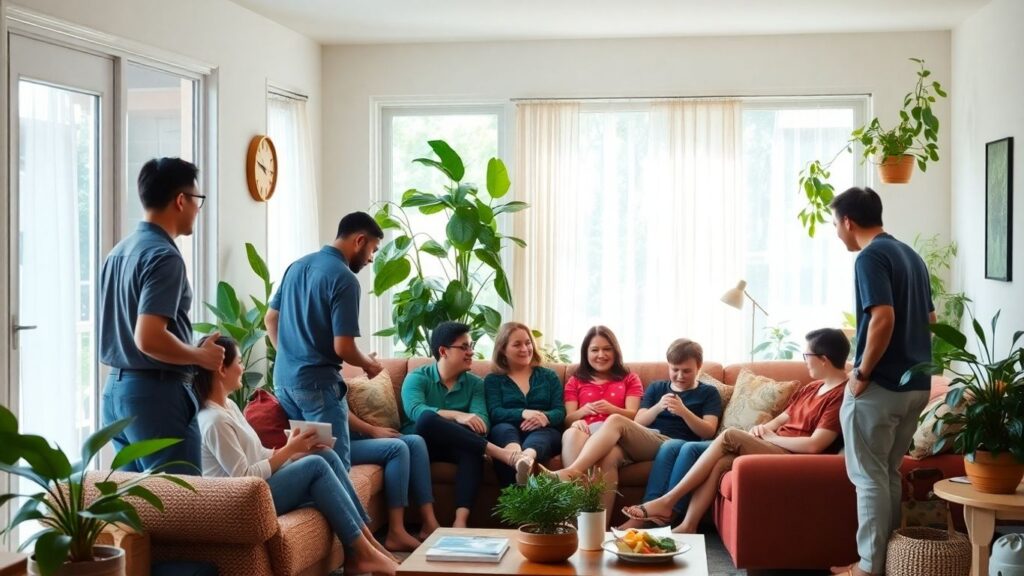
Sometimes, polyamorous relationships form into what’s called a triad, where three people are all romantically involved with each other. Think of it as a V-shape, but with the two people at the ends also connected. It’s not uncommon to see a structure with one man and two women, or one woman and two men, where everyone is dating everyone else. These arrangements often involve deep emotional connections and shared living spaces. It’s about building a family unit, not just a series of dates. For example, one couple shared that they’ve been together for years, with their children growing up together. They don’t necessarily see themselves as strictly ‘polyamorous’ but rather as a unique family that just is. They found that cohabiting with multiple partners felt natural after falling in love with more than one person around the same time.
Exploring Relationship Anarchy And Autonomy
Relationship anarchy takes things a step further than traditional polyamory. Instead of hierarchies or predefined relationship roles, it’s all about individual autonomy. Each relationship is unique and defined by the people in it, without assuming that romantic partnerships automatically get more importance than friendships. This means no one relationship is inherently ‘more’ than another. People practicing relationship anarchy might live separately or together, depending on what works for them. It’s a commitment to freedom in how connections are formed and maintained.
The ‘Monogamish’ Approach To Open Relationships
This is a popular middle ground for many couples. ‘Monogamish’ means a couple is primarily committed to each other but allows for some outside sexual or romantic connections. It’s not about having multiple serious partners, but rather about having the option to explore other connections without it threatening the primary relationship. This often involves clear agreements about what’s okay and what’s not. For instance, a couple might agree that they can have casual sex with others but emotional intimacy with new people is off-limits. It’s a way to bring some of the benefits of ethical non-monogamy living arrangements without a full polycule structure. It acknowledges that people’s needs can change and allows for flexibility within cohabiting with multiple partners or exploring outside connections.
The Evolution Of Polyamorous Relationships

From Open Marriage To Deeper Connections
Polyamory, and the broader concept of consensual non-monogamy, isn’t exactly new. People have been exploring relationships beyond the traditional one-partner model for ages, even if the language and public awareness have shifted. Think back to the early days of “open marriage” in the 70s; it was often about sexual freedom, sometimes as a way to spice things up or address issues like long dry spells. It was a starting point for many, a way to dip a toe into non-monogamy. The journey from simply “opening up” to building deeply committed, multi-partner relationships is a significant evolution. It’s moved beyond just allowing outside sexual encounters to fostering genuine emotional connections and shared lives with multiple people.
Learning To Be Better Communicators Together
As relationships evolve, so does the need for clear and honest communication. What might have worked in the early stages of exploring polyamory might not be enough as connections deepen. This often means getting really good at talking about feelings, needs, and boundaries, even when it’s uncomfortable. It’s about actively listening and making sure everyone feels heard and respected. This continuous learning process is key to maintaining healthy, evolving polyamorous dynamics. It’s not always easy, and sometimes it feels like you’re constantly renegotiating things, but that’s part of the growth.
Re-Opening With A Renewed Understanding
Sometimes, relationships that open up might eventually decide to close back down, or perhaps shift to a different model. This isn’t necessarily a failure, but a part of the relationship’s evolution. For some, after trying polyamory, they might realize that their needs are better met in a different structure, perhaps returning to monogamy or a “monogamish” setup. This decision often comes with a deeper understanding of what works for everyone involved. It’s about adapting and finding the relationship structure that best supports the well-being and happiness of all partners, acknowledging that needs and desires can change over time. It’s a testament to the flexibility and commitment within the relationship to find the right fit, even if it means changing course. Many younger individuals are exploring these dynamics, and their relational history is still forming, unlike older individuals who may have more experience with various relationship structures [3c02].
Here’s a look at how communication styles can change:
| Stage of Relationship | Primary Communication Focus |
|---|---|
| Early Exploration | Setting initial boundaries, discussing desires |
| Deepening Connections | Expressing emotions, managing jealousy, needs clarification |
| Re-evaluation | Negotiating changes, addressing conflicts, reaffirming commitment |
“Swingtowns, easy navigating the site, no harassing upgrade ads, easy to find people, premium is not over priced….Just keep swinging, just keeping swinging” -mrgood69
So, What’s the Takeaway?
Look, building any kind of home and life with people you love isn’t always a walk in the park. Polyamory, with its unique dynamics, definitely brings its own set of challenges, like figuring out schedules, finances, and, yeah, sometimes dealing with jealousy. But as we’ve seen from these real stories, it’s totally possible to make it work. It takes a whole lot of talking, being honest, and really wanting to make things good for everyone involved. These folks show us that love can come in many forms, and with effort and open hearts, polyamorous relationships can absolutely be happy, stable, and full of love. It’s not about fitting a mold; it’s about building a life that feels right for the people in it.
Frequently Asked Questions
Is it hard to start living with multiple partners?
Starting to live together with more than one partner can feel like a big step. It often begins with talking openly about wanting a deeper connection. Then, you have to talk to your current partner(s) about the idea. It’s also super important to figure out money stuff together so everyone feels it’s fair. It takes courage, but many people find it works out well when everyone communicates.
What happens if I get jealous in a polyamorous relationship?
Jealousy can pop up, and that’s okay. It’s a normal feeling. The key is to talk about it honestly with your partner(s) instead of letting it build up. Many polyamorous people use relationship agreements, which are like guidelines, to help manage these feelings and make sure everyone’s needs are considered. It’s about working through it together.
Can kids be raised in a polyamorous family?
Yes, children can absolutely be raised in polyamorous households. Many families find that having multiple loving adults can be a great benefit, offering more support and shared responsibilities. While it’s still uncommon and sometimes misunderstood by others, these families are often just as stable and loving as any other.
Do polyamorous relationships always end in heartbreak?
Not at all! While some relationships might end, it’s often because of problems that were already there, like not talking enough or not trusting each other. Polyamory can actually help couples learn to communicate better and be more honest. Many polyamorous relationships are strong and last a long time, just like monogamous ones.
What’s the difference between polyamory and an open relationship?
Polyamory means having loving, committed relationships with more than one person at the same time. An open relationship usually means a couple is together but can have sexual relationships with other people, while often staying emotionally focused on each other. Polyamory is more about deep emotional connections with multiple partners.
Is it possible to be happy in a polyamorous relationship?
Definitely! Many people find great happiness, love, and fulfillment in polyamorous relationships. It allows for diverse connections and can lead to personal growth. While it has its challenges, like any relationship, the joy of sharing love and building a life with multiple partners can be incredibly rewarding for those involved.
Real Homes, Real Harmony — Poly Cohabitation That Works
Seeing how polyamorous cohabitation works in real life can offer clarity, confidence, and hope for your own household. Join a community where people share honest success stories, practical lessons, and the everyday habits that help shared homes thrive. Learn from others who balance love, logistics, and long-term stability with care. Sign up for a free SwingTowns account today to begin your adventure.
“We’ve only been in the LS for about a year but we have found some really great people using SwingTowns. Wish we would have found the website sooner.” -2Adults89