Real-Life Vee Polyamory: Stories and Lessons from Around the World
Diving into the world of polyamory can feel like stepping into a whole new universe of relationships. It’s not just about loving more than one person; it’s about how you build those connections, communicate, and navigate the ups and downs. This article, ‘Real-Life Vee Polyamory: Stories and Lessons from Around the World,’ aims to shed some light on a specific kind of polyamorous setup – the ‘Vee’ – and explore how people actually live it. We’ll hear from folks around the globe about their experiences, the good and the challenging, and what they’ve learned along the way. It’s a journey into understanding different ways people find love and build fulfilling connections.
Key Takeaways
- Vee polyamory involves one person dating two other people who are not dating each other.
- Real-life stories show that polyamory, including the Vee structure, is diverse and deeply personal.
- Open communication and transparency are super important for making these relationships work.
- Dealing with jealousy and societal judgment is a common part of the polyamorous experience.
- Building supportive communities is helpful for people practicing polyamory.
Understanding Vee Polyamory: Structures and Dynamics
So, what exactly is a ‘vee’ in polyamory? Think of it like the letter ‘V’. You have one person, let’s call them the hinge, who is dating two other people. The key thing here is that these two other people, the ‘arms’ of the V, are not dating each other. They might know each other, they might even be friends, but their relationship with the hinge is separate. This is a pretty common structure in polyamorous relationships, and it’s one of the many ways people practice ethical non-monogamy. It’s not about having a hierarchy, necessarily, but it does create a specific dynamic.
Defining the Vee Relationship
A vee polyamory setup involves three people: A, B, and C. Person A is dating both Person B and Person C, but Person B and Person C are not dating each other. This is the core definition. It’s important to distinguish this from other polyamorous structures, like a triad (where all three people are dating each other) or a quad (four people in various interconnected relationships). The vee is specifically about that one-to-two connection where the two ‘outsides’ don’t connect romantically or sexually with each other. This structure often comes up organically when someone who is already in a relationship decides to date someone new, and their existing partner is okay with that, but the new partner doesn’t necessarily want to date the existing partner.
Vee Polyamory in the Real World: Stories from Polyamorous People Around the Globe
People find themselves in vee relationships for all sorts of reasons. Sometimes it’s about exploring new connections without disrupting existing ones. For example, Sarah was happily married to Mark for ten years. She then met David, and they hit it off. Mark was supportive of Sarah dating David, and Sarah made sure David knew about Mark. David was also comfortable with this arrangement, and they all communicated openly. Sarah, Mark, and David formed a vee. Mark and David became friendly, but they never developed romantic feelings for each other, which suited everyone. It’s about finding what works for the individuals involved. The practical advice here often centers on clear communication from the start.
Navigating the Vee: Key Considerations
When you’re in a vee, or considering one, there are a few things to keep in mind. Communication is, of course, huge. Everyone needs to be on the same page about expectations, boundaries, and how information is shared. Time management can also be a bit of a puzzle. You’ve got the hinge person who needs to balance time between two partners, and the two ‘arms’ who need to feel like they’re getting enough attention and connection. It’s not always easy, and understanding polyamorous dynamics means recognizing that jealousy or insecurity can pop up. Having strategies to deal with those feelings, like talking them through or practicing self-soothing, is really important. It’s a learning process for everyone involved.
Here are some points to consider:
- Clear Boundaries: What are the rules around each relationship? Are the ‘arms’ expected to interact? What level of information sharing is comfortable for everyone?
- Time Allocation: How will the hinge person manage their time to ensure both partners feel valued and have quality time?
- Emotional Support: How will each person receive emotional support, especially if the hinge person is dealing with issues in one relationship?
- External Perceptions: How will you handle questions or judgments from people outside the relationship who might not understand?
“The best LS site for sure! Real people, easy to navigate, love it!” -Tlove799
Personal Journeys into Vee Polyamory
The Path to Embracing Multiple Connections
Lots of people stumble into polyamory, but for many, it’s a conscious choice, a deliberate step towards a different way of loving. It’s not usually a sudden switch from monogamy, but more of a gradual unfolding. Think of it like discovering a new flavor you never knew existed and then realizing you actually prefer it. People often start by questioning the one-size-fits-all model of relationships they grew up with. They might feel a pull towards more than one person, or perhaps a desire for different kinds of connections that one partner can’t fulfill. This isn’t about dissatisfaction with existing relationships, but rather an expansion of what’s possible. It’s about recognizing that love isn’t a finite resource that gets divided; instead, it can grow and multiply.
Discovering Authentic Relational Styles
Many individuals find that their journey into polyamory is really a journey back to themselves. It’s about shedding societal expectations and figuring out what truly feels right. For some, this means realizing they have a capacity for deep emotional and romantic bonds with multiple people simultaneously. It’s a process of self-discovery that can be both exhilarating and a little scary. You start to understand your own needs and desires more clearly, and how those fit (or don’t fit) into traditional relationship structures. This often involves a lot of introspection and honest conversations, both with oneself and with partners.
- Self-Reflection: Taking time to understand your own feelings and motivations.
- Honest Communication: Talking openly with partners about desires and boundaries.
- Experimentation: Trying out different relationship dynamics to see what works.
“Great community in here!!! Lots of beautiful people. Swingtowns has helped connect with so many new friends, love it!!!!” -2x2more
From Monogamy to Multi-Partnered Love
Transitioning from monogamy to polyamory isn’t always a straight line. It can involve a lot of learning, unlearning, and adapting. Some people start by opening up their existing monogamous relationship, while others might enter polyamory with new partners. The key is that everyone involved is aware and consenting. These personal stories of non-monogamy often highlight the challenges of navigating multiple partners globally, especially when cultural norms are deeply ingrained. It requires a commitment to communication and a willingness to work through complex emotions like jealousy. Ultimately, the goal is to build relationships that are fulfilling and authentic for everyone involved.
Here’s a look at some common steps people take:
- Initial Exploration: Reading books, listening to podcasts, or talking to people already in polyamorous relationships.
- Conscious Conversation: Discussing the possibility with a current partner, if applicable, and establishing clear boundaries and expectations.
- Gradual Opening: Slowly introducing new connections while prioritizing existing relationships and ensuring everyone feels secure.
- Ongoing Learning: Continuously communicating, reflecting, and adapting as relationships evolve.
Challenges and Triumphs in Vee Relationships

Vee relationships, like any form of non-traditional connection, come with their own set of hurdles and moments of pure joy. It’s not always smooth sailing, and honestly, who expects it to be?
Confronting Societal Norms and Misconceptions
Let’s be real, the world isn’t exactly set up to understand relationships that don’t fit the standard mold. Explaining a vee – where one person is romantically involved with two other people, who are not romantically involved with each other – can feel like a constant uphill battle. You might get blank stares, awkward silences, or even outright judgment. People often jump to conclusions, assuming jealousy is rampant or that someone is always getting the short end of the stick. It takes a lot of patience and clear communication to help others grasp the nuances. Sometimes, you just learn to keep certain aspects of your life private to avoid the energy drain of constant explanation.
The Role of Communication and Transparency
This is where the rubber meets the road, right? In a vee, or any polyamorous setup, talking openly and honestly is non-negotiable. It’s not just about saying ‘I love you’; it’s about discussing feelings, boundaries, schedules, and expectations. When you’re juggling multiple connections, misunderstandings can pop up faster than you can say ‘what just happened?’. Regular check-ins, whether they’re scheduled or spontaneous, are key. It’s about making sure everyone feels heard and valued. Transparency isn’t about oversharing every single detail, but about being upfront about what matters to the health of the relationships involved.
Managing Jealousy and Emotional Growth
Ah, jealousy. It’s the elephant in the room for many, and it can definitely show up in vee dynamics. But here’s the thing: it doesn’t have to be a relationship-ender. Many people find that working through jealousy is actually a path to significant personal growth. It often points to underlying insecurities or unmet needs.
Here are a few ways people approach it:
- Identify the root cause: Is it fear of abandonment, insecurity about your own worth, or something else entirely?
- Communicate your feelings: Talk to your partner(s) about what you’re experiencing without blame.
- Practice self-soothing: Develop strategies to manage difficult emotions independently.
- Seek external support: Sometimes talking to a therapist or a trusted friend outside the relationship can provide perspective.
“Swingtown is so great in am having so much fun and it’s the best site to visit and enjoy. The people are so friendly.” -JS12
Ultimately, the triumphs in vee relationships often come from successfully navigating these challenges. It’s about building trust, fostering emotional maturity, and creating connections that are authentic and fulfilling, even if they look different from what society expects.
Building Community and Support in Polyamory
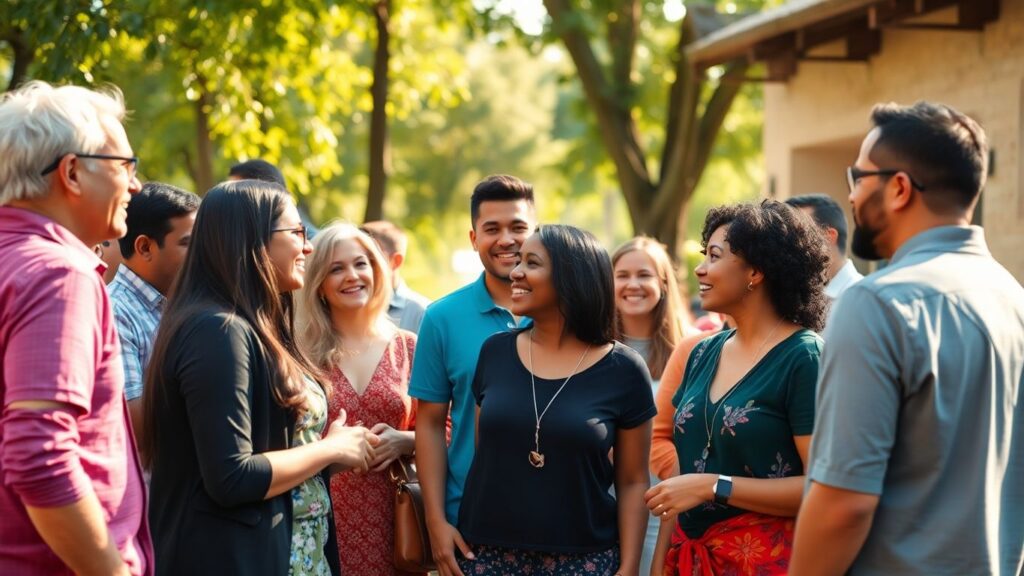
The Modern Village: Polyamorous Support Networks
When you’re exploring polyamory relationships experiences, it can feel like you’re charting new territory. It’s not always easy to find people who get it, right? That’s where community comes in. Think of it like building your own modern village, a network of people who understand the ins and outs of non-monogamous living. These networks aren’t just for sharing war stories; they’re vital for emotional support, practical advice, and just feeling less alone. Many polyamorous individuals find that these communities offer a unique kind of belonging, a space where their relationship structures are not just accepted but celebrated. It’s about finding your people, the ones who can offer a listening ear or a helpful suggestion when you’re navigating the complexities of multiple connections.
Finding and Engaging with Polyamory Communities
So, how do you actually find these communities? It’s often a mix of online and in-person connections. Many cities have local meet-up groups, often advertised on social media or dedicated polyamory resource sites. These gatherings can range from casual coffee chats to more structured discussions or even potlucks. Online forums and social media groups are also huge. They provide a space to connect with people globally, share experiences, and ask questions anonymously if you prefer. The key is to be open and engage. Don’t be afraid to introduce yourself and share a bit about your journey. Remember, everyone in these spaces has been new at some point. Finding a good fit might take a little time, but the payoff in terms of support and shared understanding is immense. You can find a great starting point for discovering these resources here.
Lessons Learned from Diverse Relationship Models
Interacting with people from various polyamory relationships experiences teaches you a lot. You see different ways people manage time, communicate boundaries, and handle jealousy. It’s a constant learning process. For instance, some people are fantastic at scheduling, treating their calendars like a work of art to balance multiple partners and personal time. Others have developed incredible communication skills, able to articulate their feelings and needs with remarkable clarity. You also learn that jealousy, while uncomfortable, can be a signpost for deeper personal work, rather than a relationship-ender. It’s about seeing how others have grown through challenges and adapting those lessons to your own life. It really shows you that there isn’t one ‘right’ way to do polyamory; it’s about finding what works for you and your partners.
“We are very excited to have joined Swing Towns. We have already chatted and met some fun people. We look forward to meeting many more friends and having a great time making new connections.” –
IzzyBlossomKatee
Here are some common ways people build their support networks:
- Local Meetups: Regular in-person gatherings for casual conversation and community building.
- Online Forums & Social Media: Digital spaces for discussion, advice, and connecting with a wider audience.
- Workshops & Educational Events: Opportunities to learn specific skills and meet like-minded individuals.
- Therapist Directories: Finding professionals experienced in non-monogamous relationship dynamics.
- Friend Groups: Cultivating friendships with other polyamorous or ethically non-monogamous people.
The Evolving Landscape of Love and Relationships
Beyond Traditional Paradigms of Partnership
It feels like we’re living in a time where the old ways of doing things, especially when it comes to love and relationships, are really being questioned. For ages, the script was pretty much set: meet someone, get married, maybe have kids, and that’s that. But now? People are realizing that love isn’t a one-size-fits-all deal. We’re seeing more and more folks step outside the box, exploring connections that don’t fit neatly into the monogamous mold. It’s not just about finding ‘the one’ anymore; it’s about acknowledging that we can have different kinds of meaningful relationships with different people, and that’s okay. This shift is happening everywhere, from how we talk about commitment to how we build families.
The Future of Polyamory and Human Connection
Looking ahead, it’s pretty clear that the conversation around polyamory and other forms of consensual non-monogamy is only going to get bigger. More people are openly talking about their experiences, and resources are popping up everywhere, making it easier for others to learn and connect. Think about it: a decade ago, finding information felt like digging through dusty corners of the internet. Now, there are podcasts, blogs, apps, and communities galore. This increased visibility means more acceptance, and more acceptance means more people feel safe to explore these relationship styles authentically.
Here’s a snapshot of how interest in open relationships has been growing:
| Year | Percentage of UK OkCupid Users Open to Open Relationships |
|—|—|—|
| 2020 | 26% |
| 2021 | 29% |
| 2022 | 31% |
This trend suggests a growing comfort with the idea that relationships can be more fluid and diverse. It’s not necessarily about replacing monogamy, but about adding more options to the menu of human connection.
Celebrating Diversity in Love and Relationships
Ultimately, what all these stories and shifts point to is a celebration of diversity. We’re learning that love can manifest in so many beautiful and varied ways. Whether it’s a vee, a triad, or any other configuration, the core elements often remain the same: honesty, respect, and a commitment to personal growth. The real triumph is in recognizing and valuing the unique ways people choose to connect and build their lives. It’s about moving past judgment and embracing the idea that different relationship structures can bring fulfillment and joy. As we continue to evolve, the goal is a world where all forms of consensual love are understood and respected, not just tolerated.
“I recommend swingtowns because it’s the first site that even as a free profile you can still connect with ppl. I have since upgraded to lifetime but me and my wife have met some really fun cpls since we started on this site so we fully recommend swingtowns.” -TheRowan
Wrapping It Up
So, what have we learned from all these different stories? It seems pretty clear that love isn’t just one-size-fits-all. The people we heard from, like Xavier, Jean, Molly, and Leanne, show us that relationships can really come in all sorts of shapes and sizes. It’s not always easy, and there’s a lot of talking and figuring things out involved, but it can also lead to a lot of personal growth and deep connections. These experiences challenge what we usually think about love and commitment, and maybe that’s a good thing. It’s a reminder that being honest, respecting everyone involved, and being open to different ways of connecting can lead to fulfilling lives. The world of relationships is vast, and polyamory is just one of the many ways people are finding happiness and building communities.
Frequently Asked Questions
What exactly is a ‘Vee’ in polyamory?
Imagine a pizza slice! In a ‘Vee’ relationship, one person is dating two other people, but those two people aren’t dating each other. It’s like one point of a triangle, with the other two points not connected.
Is polyamory the same as cheating?
Not at all! Cheating is when you break promises and lie to your partner. Polyamory is all about being honest and open with everyone involved. Everyone knows and agrees to the relationships.
Do people in polyamorous relationships get jealous?
Yes, jealousy can happen, just like in any relationship. But in polyamory, people often talk about their feelings openly. They see jealousy as a chance to understand themselves and their partners better, not as a reason to end things.
Is it hard to manage time with multiple partners?
It can be! Juggling schedules and making sure everyone feels loved and important takes effort. Good planning and clear communication are super important for making it work smoothly.
Can polyamory work for people who are married?
Absolutely. Many married couples choose to explore polyamory together. It often involves opening up their marriage with clear rules and lots of talking to make sure both partners feel secure and happy.
What are the biggest benefits of polyamory?
People often find they can be more themselves and experience a wider range of love and connection. It can lead to a lot of personal growth, deeper friendships, and a strong sense of community, like having a big, supportive family.
Global Love – Real Stories of Vee Polyamory
From different cultures to shared values, Vee relationships thrive in unique ways around the world. Discover real stories of love, growth, and connection from people living this dynamic every day. Sign up for a free SwingTowns account today and start exploring your own path in the global polyamory community.
“Swing towns is my go to dating app. I just joined but truly am in love with swingtowns” -Th3gi4nt