
Small-Space Polyamory Cohabitation: Tips to Make It Work
Living in close quarters with multiple partners can be a challenge, especially when space is tight. Polyamorous cohabitation in small spaces requires a bit of creativity and a lot of open communication. It’s not always easy, but with the right approach, it can definitely work. This guide offers some pointers to help make your shared small-space living arrangement smoother and more enjoyable for everyone involved.
Key Takeaways
- Define clear personal space needs for each individual, even in limited areas, to prevent feelings of being crowded or overlooked.
- Get creative with room arrangements and furniture to maximize functionality and privacy within a small home.
- Establish household agreements upfront, covering finances, chores, and conflict resolution, to avoid misunderstandings later.
- Be prepared to accommodate different lifestyles, habits, and routines by fostering flexibility and mutual respect.
- Prioritize individual autonomy by creating private retreats and respecting personal time, even when sharing a small living space.
Navigating Shared Living Spaces
Living with multiple partners in a smaller home can feel like a puzzle, especially when you’re first figuring out how to make it work. It’s all about finding that balance between togetherness and personal space. The key is open communication and a willingness to adapt. When you’re managing relationships in shared apartments, things like personal space needs become super important. Think about it: would you rather have a huge living room but tiny bedrooms, or a bunch of smaller rooms where everyone can have their own door to close? It’s a practical consideration that impacts daily life.
Defining Personal Space Needs
This is where you really have to get honest with yourselves. What does ‘personal space’ actually mean to each person in the household? For some, it might be a dedicated room, even if it’s small. For others, it could be a specific corner of a room, or even just a certain time of day when they know they won’t be disturbed. It’s not just about physical space, either. It’s about mental space, too. Knowing you have a place to retreat to, even for a little while, makes a big difference when you’re navigating non-monogamy in close quarters.
Creative Room Arrangements
Don’t feel boxed in by traditional layouts. Sometimes, a little creativity goes a long way. Maybe the master bedroom can accommodate two beds, or perhaps a large walk-in closet can be converted into a cozy personal nook. Think about furniture that serves multiple purposes, like storage ottomans or murphy beds. Even rearranging existing furniture can change the feel of a room and create more defined zones for different activities or people. It’s about making the space work for your unique polycule, not forcing your polycule to fit into a standard mold.
The Role of Guest Rooms
In a polyamorous household, a ‘guest room’ can take on many meanings. It might be a space for partners who don’t live with you to stay over comfortably. It could also serve as a temporary retreat for a nesting partner who needs some solo time, or even a quiet zone for focused work. Sometimes, this room becomes a neutral territory for dates or for partners to connect without disrupting the main living areas. It’s a flexible space that can adapt to the changing needs of the household and its relationships. It’s important to consider how this space is used and who has access to it, as it can be a point of contention if not clearly defined.
“This is an amazing place to explore and experience. The best online platform for swinging.” -Decentfinder
Establishing Household Agreements
Moving in together, especially in a polyamorous setup, is a big step. It’s not just about sharing a roof; it’s about sharing lives, and that means getting some ground rules down. Without clear agreements, even the most loving relationships can get tangled up in misunderstandings and resentment. Think of it like building a house – you need a solid foundation before you start putting up walls.
Pre-Move-In Discussions
Before anyone packs a single box, it’s super important to sit down and talk. Like, really talk. What are everyone’s expectations for living together? This isn’t just about who gets which bedroom; it’s about the bigger picture. You’ll want to cover things like:
- Personal Time: How much alone time does each person need, and how will that be respected? Are there specific times or days when someone needs to be undisturbed?
- Guest Policies: What are the rules for having guests over? How much notice is needed? Are there limits on overnight stays?
- Relationship Dynamics: How will you handle date nights or private time between partners when living in a shared space? Will everyone always be included, or are separate outings okay?
- Future Plans: Discussing potential future additions to the household, whether that’s pets, children, or even new partners, is also wise.
“I am enjoying swingtown and the way it is run. Hope to meet some great people who enjoy healthy sexy fun together. Life is tooo short not to.” -teaser71902
Financial and Chore Division
Money and chores are classic sources of conflict in any household, and polyamorous ones are no exception. Getting this sorted early can prevent a lot of drama.
- Finances: How will shared expenses be handled? Will there be a joint account? How will contributions be calculated, especially if incomes vary significantly? What’s the budget for household items, groceries, and entertainment?
- Chores: Who does what around the house? A simple chore chart can be a lifesaver. Consider a system that feels fair to everyone, perhaps rotating tasks or assigning them based on preference or availability. Some households even hire outside help for cleaning if finances allow.
Here’s a quick look at how you might break down responsibilities:
| Task Category | Responsibility Model |
|---|---|
| Groceries | Shared budget, rotating shoppers |
| Cooking | Assigned nights, or shared prep |
| Cleaning | Weekly rotation, or specific zone assignments |
| Bill Payment | Designated person, or shared online portal |
Conflict Resolution Strategies
No matter how well you plan, disagreements will pop up. Having a plan for how to handle them is key. It’s not about avoiding conflict, but about managing it constructively.
- Scheduled Check-ins: Regular meetings, maybe weekly or bi-weekly, where everyone can voice concerns or bring up issues in a calm setting.
- Active Listening: Making sure everyone feels heard and understood, even if you don’t agree with their point of view.
- Mediation: Agreeing beforehand on a neutral third party (a therapist, a trusted friend) who can help mediate serious disputes if you get stuck.
- Focus on the Issue, Not the Person: Try to address the behavior or situation causing the problem, rather than making personal attacks.
Accommodating Different Lifestyles
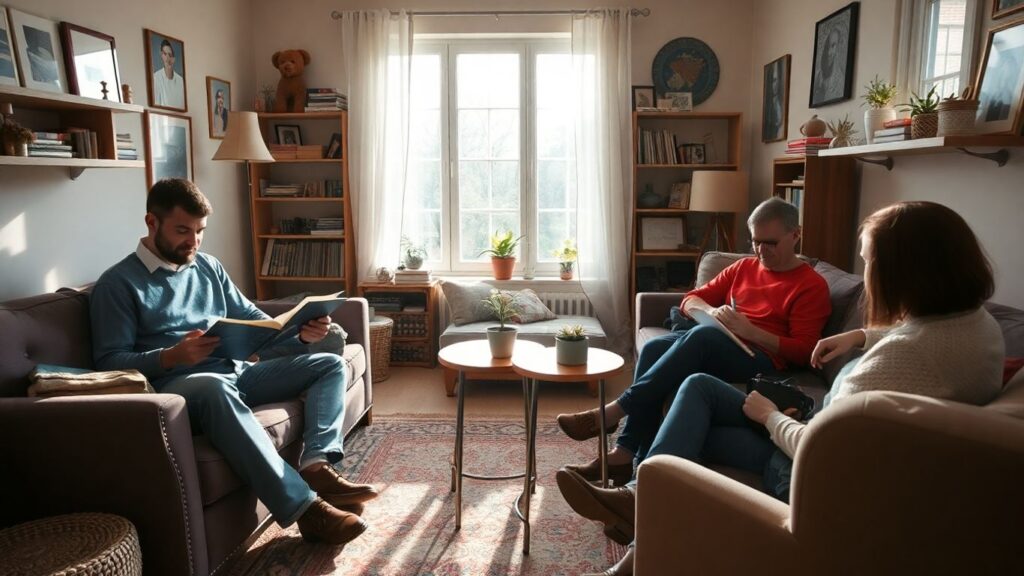
Living with multiple partners means you’re bound to run into differences. It’s not just about sharing a bathroom; it’s about sharing a life, and people come with their own unique ways of doing things. Think about it: one person might be a night owl who thrives on late-night creative bursts, while another needs to be in bed by 9 PM sharp for an early start. These aren’t small quirks; they can really impact the household vibe if not handled with care.
Dietary and Habitual Differences
Food is a big one. Maybe one partner is vegan, another is a strict carnivore, and someone else has a serious gluten intolerance. This can make meal planning and kitchen management a bit of a puzzle. You might end up with separate fridge shelves, designated cooking zones, or a shared grocery list that’s color-coded by dietary needs. It’s about finding a system that works without making anyone feel like an inconvenience. The same goes for habits – snoring, tidiness levels, or even how someone unwinds after a long day can be points of friction. Openly discussing these differences before they become major issues is key.
Balancing Social and Private Time
This is where things get interesting. In a polyamorous household, you’ve got multiple relationships under one roof. This means there’s a constant dance between wanting to spend quality time with everyone and needing your own space. How do you make sure everyone gets enough one-on-one time without feeling like you’re constantly on call? It often involves a lot of scheduling and clear communication about when you’re available and when you need to recharge alone. Sometimes, it means designating specific nights for individual dates or partner hangouts.
Respecting Individual Routines
Everyone has their own rhythm. Some people like to start their day with a quiet meditation, others with a loud workout playlist. Some need a tidy space to focus, while others can work amidst a bit of creative chaos. Trying to force everyone into one rigid routine rarely works. Instead, focus on creating an environment where individual routines can coexist. This might mean having quiet hours in the morning, designating specific zones for different activities, or simply being mindful of noise levels when someone is trying to concentrate or relax. It’s about acknowledging that your partners are individuals with their own needs and preferences, and that’s a good thing.
“Really enjoying Swingtowns a lot! Very easy to use the app and lots of great people too.” -KarandBri1970
Rethinking Traditional Housing Models
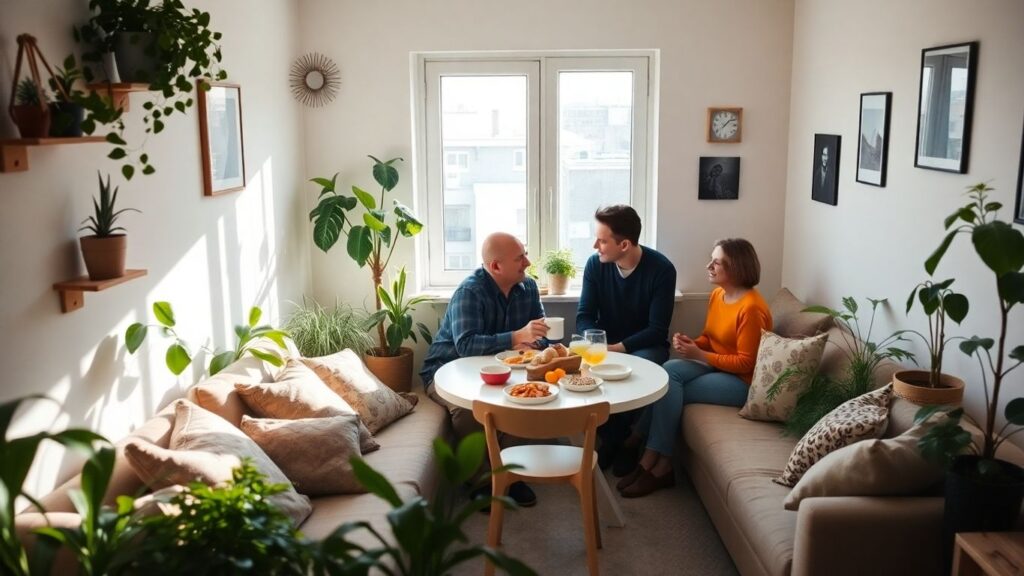
Sometimes, the standard house just doesn’t cut it for polyamorous living. We’re used to the idea of one family, one house, but that model can feel pretty cramped when your ‘family’ includes multiple partners and potentially their partners too. It’s time to get creative and think outside the box when it comes to where and how we live together.
The ‘Shared Custody’ Approach
This model is kind of like how divorced parents might share custody of their kids, but for adult relationships. Instead of everyone living under one roof all the time, partners might split their time between two or more homes. This could mean one partner lives primarily with one person but spends several nights a week with another, or it could be more balanced. It’s a way to get the benefits of close relationships and family life while still maintaining some individual space and autonomy. It works well when people have different lifestyles or needs that are hard to combine under one roof, like differing views on cleanliness or whether or not to have alcohol in the house. It allows for deep connections without demanding total lifestyle integration. This approach can be a great way to build a poly family without the constant logistical hurdles of a fully merged household.
Co-housing and Duplex Living
Think of co-housing as a neighborhood within a neighborhood. Several households live on the same property, often sharing common areas like kitchens, gardens, or workshops, but each having their own private dwelling. Duplexes offer a similar vibe, with two separate living units attached or side-by-side. These setups are fantastic for polycules because they provide built-in proximity and opportunities for shared meals or activities, while still offering distinct private spaces for each relationship or individual. It’s a middle ground that offers more connection than living miles apart but more privacy than a single, large shared home.
Multiple Tiny Homes on One Lot
This is a really interesting option for those who value independence but want to live close. Imagine a single piece of land, but instead of one big house, there are several smaller, self-contained tiny homes. Each person or couple gets their own little space, complete with its own entrance and amenities. Yet, being on the same lot means spontaneous visits, shared meals in a common outdoor area, or quick chats over the fence are easy. It’s a way to maximize personal space and autonomy while still fostering a strong sense of community and shared living. It really puts the ‘individual’ back into communal living.
“I’ve been looking for a fun community who share the same interests as I do, and most have failed to meet my expectations. But SwingTowns by far has had the most fun engagements with REAL people, much more than anywhere else I’ve found. Most people on here have been fun, sexy, engaging, and willing to help a young buck learn the ropes of this lifestyle.” -Johncarpenter
Prioritizing Individual Autonomy
Living together in a polyamorous setup, especially in smaller spaces, really shines a spotlight on how important it is for everyone to have their own sense of self and personal boundaries. It’s not just about sharing a roof; it’s about making sure each person feels like they have their own corner of the world, even when that world is a bit cozy. Your worth isn’t tied to your relationship status or how many partners you have; it comes from within.
Ensuring Private Retreats
Think of private retreats as essential recharge stations. These are spots where an individual can go to be completely alone, decompress, or just exist without needing to interact. In a small space, this might not mean a whole separate room, but it could be a designated corner, a comfortable chair with a privacy screen, or even just a clear agreement about when a space is off-limits for others. It’s about respecting that need for solitude.
- Designated Quiet Zones: Even a small nook can become a sanctuary with the right setup – think comfy cushions, good lighting, and maybe some noise-canceling headphones.
- Scheduled Alone Time: Agree on blocks of time where each person gets guaranteed solo time, no interruptions allowed.
- Visual Cues: Use simple signals, like a specific plant on a desk or a closed door (if available), to indicate when someone needs uninterrupted personal time.
The Importance of Personal Offices
For many, a personal office, even a tiny one, is a lifeline. It’s a place for work, hobbies, or just a mental escape. If a full office isn’t feasible, get creative. Maybe it’s a fold-down desk in a closet, a shared workspace with assigned times, or a dedicated spot at the dining table that’s only ‘yours’ during certain hours. Having a place where you can spread out your things and focus without being disturbed is a big deal for maintaining individual identity and productivity. It’s about having a space that supports your individual pursuits, whether that’s remote work or a creative project.
Flexible Sleeping Arrangements
Sleeping arrangements can be a hot topic in any cohabiting situation, and polyamory adds layers. It’s not always about everyone sleeping in the same bed every night. Some people might have a primary sleeping space, while others might utilize guest rooms or even separate sleeping areas for different partners or nights. The key is open communication about comfort, needs, and preferences. Sometimes, a “megabed” made of multiple mattresses can work, or perhaps partners rotate sleeping arrangements. What matters most is that everyone feels comfortable and respected in their sleeping situation, acknowledging that needs can change day-to-day.
“The Swingtowns community has been a major source of inspiration for many years now and has become one of the most popular destinations for swing communities” -Thunderdicka
Here’s a quick look at how different needs might be met:
| Need | Small Space Solution |
|---|---|
| Work/Study | Fold-down desk, shared desk with time slots |
| Hobbies/Crafts | Portable craft bins, designated shelf space |
| Quiet Relaxation | Comfortable armchair with a screen, noise-canceling headphones |
| Personal Storage | Vertical shelving, under-bed storage, storage ottomans |
| Partner Visits | Clear guest room policies, scheduled visits |
Building a Sustainable Polyamorous Family

Compatibility and Flexibility
Creating a lasting polyamorous family unit, especially within shared housing for polycules, really hinges on how well everyone gets along and how willing people are to bend. It’s not just about romantic connections; it’s about day-to-day living. Think about it: can you all agree on chores, finances, and even just how loud the TV can be? The more adaptable everyone is, the smoother things will likely go. Many people find that trying to force a rigid structure onto a polyamory living arrangement just doesn’t work. Instead, focusing on a high degree of compatibility across the board, from daily habits to long-term goals, is key. Flexibility means being ready to compromise when needs clash, which they inevitably will. It’s about finding that sweet spot where everyone feels heard and respected, even when you don’t get your first choice.
Effective Communication Skills
When you’re talking about ethical non-monogamy cohabitation, clear communication isn’t just helpful; it’s the bedrock. Without it, misunderstandings can quickly snowball into major conflicts. This means not just talking, but actively listening to what your partners are saying, and being able to express your own needs and boundaries without blame. It’s a skill that needs constant practice and refinement. Regular check-ins, perhaps weekly or bi-weekly, can be incredibly useful. During these times, you can discuss how things are going, address any brewing issues, and reaffirm your commitments to each other. It’s also important to have a plan for when disagreements do arise. Having a pre-agreed-upon method for conflict resolution, like mediation or simply setting aside dedicated time to talk things through calmly, can save a lot of heartache.
“Swingtowns is hands down the best community that I have had the pleasure to be a part of. Would recommend this website to anyone in the lifestyle!” -SlikRik1Ace
The Rewards of Successful Cohabitation
While the path to successful polyamory living arrangements can be tough, the rewards can be immense. Imagine a household where responsibilities like cooking, cleaning, and childcare are shared among multiple adults. This can lead to more free time and less stress for everyone. Financially, pooling resources can create greater stability and comfort, making it easier to achieve shared goals like saving for a house or planning for the future. Beyond the practical benefits, there’s the simple joy of constant companionship and a built-in social network. You have partners to share life’s ups and downs with, creating a strong sense of community and belonging. This kind of shared life, when it works well, offers a unique and deeply fulfilling way to experience relationships.
Here are some common aspects of successful polyamorous cohabitation:
- Shared Vision: All partners have a clear, agreed-upon vision for the household and the family unit.
- Resource Pooling: Willingness to share finances, chores, and other resources equitably.
- Respect for Autonomy: Each individual’s need for personal space, time, and privacy is honored.
- Open Dialogue: Consistent and honest communication about needs, feelings, and concerns.
- Conflict Management: Proactive strategies for addressing disagreements before they escalate.
Wrapping It Up
So, living in a small space with multiple partners might seem tricky, but it’s definitely doable. It really comes down to talking things out, being honest about what you need, and finding ways to make it work for everyone involved. Whether that means getting creative with sleeping arrangements or just making sure everyone gets their own quiet time, the goal is to build a home that feels good for all of you. It’s not always easy, and there will be bumps along the way, but with a little effort and a lot of communication, you can absolutely make small-space polyamory a success.
Frequently Asked Questions
What’s the biggest challenge when multiple polyamorous partners live together?
The main hurdle is figuring out how to share space, money, and daily tasks fairly. It’s easy for disagreements to pop up about chores, who pays for what, and how to spend free time. Making sure everyone feels heard and respected is super important, especially if one couple already lived together before others joined.
How can we make sure everyone has their own space in a small home?
Get creative! You might need to rethink room layouts, maybe use dividers to create personal zones, or even have a dedicated guest room that can double as a private retreat. Some people even use their office or a hobby room as a personal sanctuary where they can go to be alone.
Is it necessary for everyone to have their own bedroom?
Not always! While some people really value having their own bedroom, others are fine sharing or using a guest room for alone time. The key is to talk about what each person needs for privacy and comfort, and then find a solution that works for your specific group.
What are some ways to handle disagreements about money and chores?
Before moving in, have clear talks about how you’ll split bills, groceries, and cleaning. Some groups pool all their money, while others keep finances separate. Setting up a chore chart or agreeing on who is responsible for what can prevent a lot of arguments.
What if people in the household have very different daily routines or habits?
This is where flexibility and communication shine. If someone works nights or needs quiet time to study, the household needs to be understanding. It’s about respecting each other’s rhythms, whether it’s about when you eat, sleep, or socialize.
Are there alternatives to everyone living in one big house?
Absolutely! Some poly families opt for a ‘shared custody’ model, living in separate homes that are close by, like a duplex or houses on the same lot. This allows for more individual space and autonomy while still maintaining a strong family connection.
Close Quarters, Strong Bonds — Making Small-Space Poly Living Thrive
Small-space poly living can work beautifully when communication, boundaries, and creativity lead the way. Join a community where people share real strategies for cohabiting with care, even when space is limited. Learn how others balance privacy, togetherness, and logistics in compact homes without sacrificing connection. Sign up for a free SwingTowns account today to begin your adventure.
“Swing Towns knows what’s up! Finally a platform where like minded people can connect.” -Cboy6983