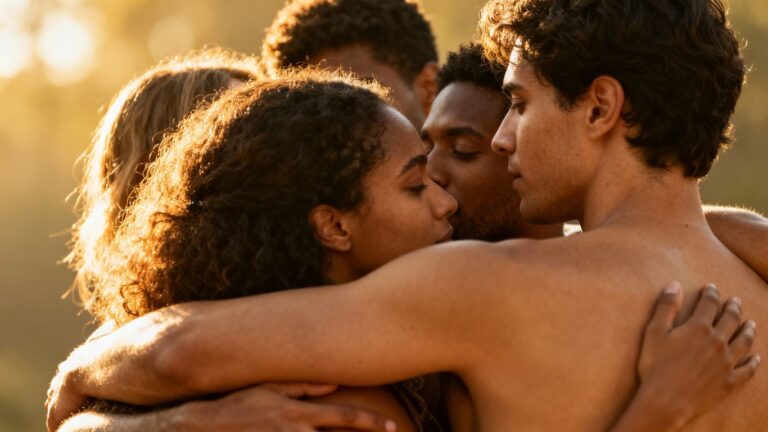
Queer & Polyam: LGBTQ+ Embracing Multi-Partner Relationships
More and more LGBTQ+ folks are looking into polyamorous relationships these days. It’s a big shift, and it makes sense when you think about it. For many queer people, the idea of traditional relationships has always been a bit different. This article will look at why queer individuals are exploring polyamory, how it connects with queer identity, and what makes these relationships special.
Key Takeaways
- Polyamory means having multiple romantic and sexual relationships with everyone involved knowing about it.
- Queer people often already question standard relationship ideas, which can make polyamory a natural fit.
- The LGBTQ+ community has a history of defining relationships on its own terms, outside of mainstream norms.
- Queer polyamorous relationships often focus on deep respect and care between partners.
- Not all LGBTQ+ people are polyamorous; there’s lots of different relationship styles in the community.
Understanding Polyamory: Many Loves, Many Forms
Defining Polyamory: More Than One Love
So, what exactly is polyamory? It’s a word that’s been popping up more and more, but it’s not always clearly understood. Basically, it means having multiple loving, intimate relationships at the same time, with the knowledge and consent of everyone involved. It’s different from cheating because honesty and communication are key. Think of it as ethically non-monogamous. Building connections with more than one person, grounded in mutual respect and care, lies at the heart of this. The focus extends beyond sex — it’s rooted in emotional intimacy, commitment, and creating relationships that work for everyone involved. Choosing this path means rejecting the notion that love is scarce, and instead embracing the possibility of loving multiple people fully and authentically. You can find more information about polyamorous relationships online.
The Spectrum of Polyamorous Relationships
Polyamory isn’t one-size-fits-all. There’s a whole spectrum of ways people practice it. Some common structures include:
- Hierarchical Polyamory: Where one relationship is considered primary, and others are secondary.
- Non-Hierarchical Polyamory: Where all relationships are considered equal.
- Relationship Anarchy: Which throws out the rule book altogether and focuses on individual connections rather than pre-defined structures.
“I am enjoying swingtown and the way it is run. Hope to meet some great people who enjoy healthy sexy fun together. Life is tooo short not to.” -teaser71902
Polyamory as an Identity
For some, polyamory is more than just a relationship style; it’s an identity. This is a way of seeing the world and approaching relationships that feels authentic and true to who they are. It means rejecting the societal pressure to conform to monogamy and embracing a more expansive, fulfilling way of loving. For them, this isn’t just something they do — it’s an expression of who they are. This can mean that their polyamorous identity influences how they interact with the world, the communities they seek out, and the values they prioritize. It’s a conscious decision to live in alignment with their beliefs about love, connection, and freedom. It’s about defining polyamory for themselves.
The Queer Community’s Unique Connection to Polyamory

Queerness and Relationship Exploration
For many in the LGBTQ+ community, the journey often starts with questioning norms. This inherent questioning extends beyond just sexual orientation and gender identity, influencing how relationships are approached. Multi-partner dating in the LGBTQ community isn’t just a trend; it’s a continuation of challenging societal expectations. Many queer individuals find that exploring different relationship structures, including polyamory, aligns with their broader exploration of self and identity. It’s about creating relationships that truly fit, rather than conforming to a pre-set mold.
Breaking Heteronormative Relationship Scripts
Queer people often find themselves rewriting the rules when it comes to relationships. We didn’t see ourselves in every rom-com, so we had to make our own blueprints. This means actively dismantling the traditional, often restrictive, scripts of heteronormative relationships. This can involve:
- Challenging the idea of a single, primary partner.
- Redefining commitment and intimacy.
- Prioritizing open communication and consent.
“This is an amazing place to explore and experience. The best online platform for swinging.” -Decentfinder
Creating New Blueprints for Love
Because the queer community has often been excluded from traditional relationship models, there’s a greater openness to experimentation and innovation. This leads to the creation of unique relationship structures that prioritize individual autonomy, communication, and consent. Polyamory for queer individuals becomes a way to build relationships that are authentic and fulfilling, rather than simply replicating what’s been seen before. It’s about designing relationships that work for everyone involved, based on mutual respect and understanding. This freedom to create new blueprints extends to all aspects of relationships, from defining roles and responsibilities to navigating conflict and celebrating successes. This approach allows for greater flexibility and adaptability, benefiting CNM relationships as individuals and relationships evolve over time.
Why More LGBTQ+ People Are Exploring Polyamory Today

Challenging Societal Norms and Expectations
For a long time, LGBTQ+ folks have been pushing against what society expects from relationships. Because same-sex marriage wasn’t legal everywhere for so long, many in the community got used to making their own rules. This means questioning the usual ideas about relationships, including monogamy. It’s like, if you’re already breaking one norm (being with someone of the same gender), why not rethink others too? This mindset makes exploring different relationship styles, like polyamory, feel more natural.
The Historical Context of LGBTQ+ Relationships
Historically, LGBTQ+ relationships haven’t always fit neatly into the traditional marriage box. This has led to a culture of innovation and creating relationship structures that work best for the individuals involved. This history of defining relationships on their own terms makes the LGBTQ+ community more open to polyamory.
“I recommend swingtowns because it’s the first site that even as a free profile you can still connect with ppl. I have since upgraded to lifetime but me and my wife have met some really fun cpls since we started on this site so we fully recommend swingtowns.” -TheRowan
Increased Community Support and Resources
It’s way easier to find info and support for polyamory now than it used to be. There are more groups, websites, and even dating apps specifically for people interested in defining polyamorous relationships. This makes it less scary to try out polyamory because you know you’re not alone. Plus, as more people talk about it openly, the stigma decreases, and more folks feel comfortable exploring it.
Here are some examples of available resources:
- Online forums and communities
- Books and articles on polyamory
- Therapists specializing in non-monogamous relationships
Distinguishing Queer and Straight Polyamorous Dynamics
Reverence for People’s Hearts in Queer Polyamory
It’s interesting to think about how queer dynamics might differ from straight ones within polyamory. There’s often a deep respect for everyone’s feelings. In the LGBTQ+ community, there’s a tendency to value relationships and connections, even after they evolve or end. This can mean striving to treat each other with kindness and consideration, even when things get complicated. It’s about not wanting to easily discard people from your life, which is a beautiful thing.
The Role of Marginalization in Relationship Structures
Marginalization plays a big role in how LGBTQ polyamorous relationships are structured. Because queer people often face societal pressures and discrimination, they might be more inclined to build relationships that prioritize support, understanding, and resilience. This can lead to more intentional and thoughtful approaches to creating relationship agreements and boundaries. It’s about building something that works for everyone involved, considering the unique challenges they face.
Beyond White and White Queer Co-option
It’s important to acknowledge that the “re-discovery” of polyamory has been co-opted by whiteness and white queerness. Black, brown, and indigenous communities have a unique relationship with polyamory, and it’s crucial to recognize the historical context of these practices. We need to be mindful of how power dynamics and privilege can influence queer non-monogamy trends, and work towards creating more inclusive and equitable polyamorous communities.
“Swingtown is so great in am having so much fun and it’s the best site to visit and enjoy. The people are so friendly.” -JS12
Dispelling Stereotypes About LGBTQ+ Non-Monogamy
It’s easy to fall into the trap of making broad statements about entire groups of people, but when it comes to relationships, especially within the LGBTQ+ community, those statements can be really harmful. Let’s break down some common misconceptions about LGBTQ+ folks and non-monogamy.
Diversity of Relationship Preferences Within the LGBTQ+ Community
The LGBTQ+ community is incredibly diverse, and that includes how people approach relationships. There’s no one-size-fits-all model. Some people prefer monogamy, some prefer polyamory, and some fall somewhere in between. To assume everyone in the community is automatically open to non-monogamy is simply inaccurate. A new study challenges the idea that monogamy is superior.
The Harm of Generalizing Gay Relationships
Generalizing gay relationships, especially, can be damaging. The stereotype that gay men are inherently promiscuous or non-monogamous puts undue pressure on individuals to conform to a certain image. It also invalidates the experiences of gay men in monogamous relationships. This can lead to feelings of inadequacy or the belief that their relationship isn’t “real” or “valid” somehow. It’s important to remember that relationship choices are personal and varied.
Monogamous Gay Couples and Their Experiences
Monogamous gay couples often face unique challenges because of these stereotypes. If they experience difficulties, there might be a tendency to assume that opening the relationship is the solution, rather than addressing the underlying issues. This is because of the pervasive idea that non-monogamy is somehow more natural or acceptable for gay couples. It’s crucial to recognize that monogamous gay couples are just as capable of building strong, lasting relationships as any other couple, and their choices should be respected without judgment. Remember that [LGBTQ+ ethical non-monogamy] is a valid choice, but it’s not the only one.
“We are very excited to have joined Swing Towns. We have already chatted and met some fun people. We look forward to meeting many more friends and having a great time making new connections.” –
IzzyBlossomKatee
The Benefits of Openness and Support in Polyamorous Relationships

More Partners for Support and Connection
One of the coolest things about polyamory is the expanded support network. Think about it: more people to lean on during tough times, more perspectives to consider when you’re stuck, and just generally more love and care in your life. It’s like having a built-in team of cheerleaders and confidants. This can be especially helpful when dealing with life’s inevitable challenges.
Love as an Abundant Resource
Monogamy often operates under the assumption that love is a limited resource – that you can only truly love one person at a time. Polyamory flips that idea on its head. Love isn’t a pie to be divided; it’s more like a garden that can grow and expand with each new connection. This abundance mindset can be incredibly freeing, allowing you to explore multiple relationships without feeling like you’re taking away from anyone else.
Adjusting Relationships to Individual Needs
Polyamory allows for a level of customization that’s often missing in traditional relationships. Instead of trying to fit everyone into the same mold, you can tailor each relationship to meet the specific needs and desires of the individuals involved. This might mean:
- One relationship is primarily focused on emotional intimacy.
- Another is more about shared hobbies and adventures.
- A third is a deep, committed partnership with shared life goals.
“Great community in here!!! Lots of beautiful people. Swingtowns has helped connect with so many new friends, love it!!!!” -2x2more
Wrapping Things Up
So, what’s the big takeaway here? It’s pretty clear that for a lot of LGBTQ+ folks, polyamory just makes sense. We’ve already had to think outside the box when it comes to relationships, right? So, adding more love and connection into the mix isn’t such a huge leap. It’s not for everyone, of course, and that’s totally fine. But for those who are curious, or who feel like traditional setups just don’t fit, polyamory offers a different path. It’s about building relationships that truly work for you, no matter how many people are involved. And that’s a pretty cool thing.
Frequently Asked Questions
What exactly is polyamory?
Polyamory means having more than one loving, romantic, and/or sexual relationship at the same time, with everyone involved knowing about it and agreeing to it. It’s about building connections with multiple people openly and honestly.
How does being queer connect with polyamory?
While not all LGBTQ+ people are polyamorous, and not all polyamorous people are LGBTQ+, there’s a strong link. Being queer often means stepping outside traditional rules for relationships, and polyamory fits well with that idea of exploring new ways to love and connect.
Why are more LGBTQ+ people exploring polyamory now?
Many LGBTQ+ folks have already learned to create their own paths in life and love because traditional ways didn’t fit them. This makes it easier to consider other non-traditional relationship styles like polyamory. Also, there’s growing community support and resources for polyamorous relationships today.
Are queer polyamorous relationships different from straight ones?
Queer polyamory often has a deep respect for everyone’s feelings and hearts. Because LGBTQ+ people have faced challenges, they often value kindness and understanding in their relationships, even when they end. This can be different from how straight polyamorous relationships sometimes work.
Is it true that all gay people are non-monogamous?
No, not at all! While some studies show more LGBTQ+ people are in open relationships, it doesn’t mean all gay people are non-monogamous. Many LGBTQ+ individuals and couples are happily monogamous. It’s wrong to assume everyone in the community has the same relationship style.
What are the good things about open and supportive polyamorous relationships?
Being in polyamorous relationships can mean having more people to support you and share your life with. It’s based on the idea that love isn’t limited and can grow to include many. This allows relationships to be shaped to fit what each person truly needs and wants.
Meet, Mingle, Explore — Where Every Connection Opens New Doors
Looking for a space where your LGBTQ+ identity and love for multi-partner connections are celebrated? You’ve just found it. Join a welcoming community where curiosity, friendships, and meaningful relationships thrive. Sign up for your free SwingTowns account today and start exploring your possibilities.
“Really enjoying Swingtowns a lot! Very easy to use the app and lots of great people too.” -KarandBri1970