Polyamorous Sex: My Journey to Embracing My Queer Identity
Exploring polyamory and queerness can be quite a journey. It’s about figuring out what feels right for you, even when it goes against what society expects. This path has definitely taught me a lot about myself, especially how my experiences with non-monogamy helped me understand my own queer identity. It wasn’t always easy, but it led me to a more authentic way of living and loving.
Key Takeaways
- Discovering polyamory through a free love workshop opened doors to exploring different relationship styles and personal desires.
- Navigating the ups and downs of ethical non-monogamy, including positive experiences and relationship challenges, shaped my understanding of commitment and connection.
- Unlearning societal norms around relationships and identity allowed me to embrace both my queer identity and polyamorous leanings, even when they seemed to conflict.
- Experiencing queer sex for the first time and realizing there isn’t a strict ‘type’ I’m attracted to helped me connect with my queerness beyond labels.
- My style evolution, from conventional to a more expressive look like a mullet, mirrored my internal journey of embracing my authentic self and queer identity.
My Journey Into Polyamory and Queer Identity

My path to understanding myself has been a winding one, deeply intertwined with my exploration of polyamory and my burgeoning queer identity. It wasn’t a sudden revelation, but more of a gradual unfolding, like watching a flower open petal by petal. For a long time, I didn’t quite grasp how these two parts of myself fit together, or even if they could. The journey into ethical non-monogamy and self-discovery was, for me, a catalyst for a much deeper queer awakening in non-monogamy.
Discovering Polyamory Through a Free Love Workshop
My initial steps into polyamory weren’t planned. It started with an impromptu foursome that sent me down a rabbit hole. To make sense of it all, I ended up at a free love workshop. It was intense, sharing fears and insecurities with about forty other people. When I returned home, I felt ready to try again, embracing the idea of exploring sexuality through polyamory.
Navigating the Highs and Lows of Ethical Non-Monogamy
This period was a rollercoaster. There were incredible highs, like experiencing queer sex I’d only dreamed of and making out with multiple people at a club. But there were also significant lows, like a partner reacting very negatively. These experiences made me question if polyamory was truly for me, highlighting the challenges of ethical non-monogamy and LGBTQ+ exploration.
Finding My Way Back to Monogamish Living
After that intense phase, I found myself mostly practicing monogamy again, with occasional returns to ethical non-monogamy. Now, years later, I feel like I’m in a space that’s closer to monogamish. While the idea of ethical non-monogamy is always present, I’ve realized I don’t strictly identify as polyamorous. It’s a nuanced space, and I’m still figuring out what that means for me.
“I’ve been looking for a fun community who share the same interests as I do, and most have failed to meet my expectations. But SwingTowns by far has had the most fun engagements with REAL people, much more than anywhere else I’ve found. Most people on here have been fun, sexy, engaging, and willing to help a young buck learn the ropes of this lifestyle.” -Johncarpenter
My journey into polyamory and queer identity has been a significant part of my life. It’s been about challenging norms and finding a more authentic way to live and love. The experiences have shaped how I view relationships and my own sense of self, particularly in relation to my queer identity exploration.
Challenging Societal Norms and Embracing Authenticity
Unlearning Social Conditioning Around Relationships
It’s wild how much we absorb from society about how relationships should look. For years, I just accepted the script: one partner, forever, the whole nine yards. But when I started exploring polyamory, it felt like I was breaking all these unspoken rules. It’s not just about dating multiple people; it’s about questioning the very foundation of what a relationship is supposed to be. This meant really digging into why I believed certain things and whether those beliefs actually served me or just society’s expectations. It’s a process, for sure, and sometimes it feels like peeling back layers of an onion, only to find more layers underneath.
The Conflict Between Queer Identity and Polyamory
Honestly, there were times I felt like I couldn’t be both queer and polyamorous, or that one identity somehow invalidated the other. Maybe it was the lingering societal messages, or maybe it was just my own internal confusion. I worried that being poly meant I was just greedy or unable to commit, which felt like a direct contradiction to the queer community’s emphasis on authenticity and challenging norms. It’s a strange paradox: embracing a queer identity often means rejecting rigid boxes, yet polyamory sometimes gets stereotyped into its own rigid box. I had to actively work to see how these parts of me could coexist and even strengthen each other. It’s about recognizing that authenticity isn’t a one-size-fits-all concept.
Finding Groundedness in Both Identities
Eventually, I realized that my queer identity and my polyamorous lifestyle weren’t in conflict; they were actually complementary. Both involve a rejection of traditional constraints and a commitment to living truthfully, even when it’s messy. It’s about creating your own definition of what love and connection look like, rather than relying on pre-approved models. This journey has taught me that embracing all parts of myself, even the ones that seem contradictory on the surface, is where true freedom lies. It’s about building a life that feels genuinely mine, not one that’s dictated by external pressures. This exploration into open relationships and polyamory has been a huge part of that self-discovery.
How Polyamorous Sex Encouraged Me to Explore My Queer Identity

Experiencing Queer Sex for the First Time
Opening myself up to polyamory and ethical non-monogamy really cracked open my understanding of my own sexuality. Before, I thought I had a pretty clear idea of who I was attracted to, but the reality of exploring relationships with multiple people showed me just how fluid and expansive my desires could be. It was in this space that I first experienced what I’d call queer sex, and it felt like a revelation. It wasn’t just about physical acts; it was about a deeper connection and a freedom to express myself in ways I hadn’t even imagined.
The Lack of a Definitive ‘Type’ and Its Connection to Queerness
One of the biggest shifts for me was realizing I don’t have a specific ‘type’ of person I’m attracted to. My past partners have been incredibly diverse – different genders, professions, and personalities. This lack of a predictable pattern, which once might have felt confusing, now feels like a direct link to my queer identity. It’s like my attraction isn’t confined to a narrow box, and that feels inherently queer. Polyamory and sexuality are deeply intertwined for me, allowing this expansive attraction to be seen and honored.
Framing Authenticity Through Personal Experience
This journey has been all about finding authenticity. This process involves reflecting on my experiences—particularly the diverse sexual encounters and relationships that polyamory has introduced into my life—and exploring how they interconnect to create a fuller understanding of who I am. It also means recognizing how polyamory has deepened my understanding of queerness, not as a rigid label to adopt, but as a fluid and complex way of being. It’s a continuous process of self-discovery, and I’m learning to trust my own experiences as the most valid guide.
Redefining Relationships and Self-Expression
From Impromptu Foursomes to Open Relationships
My relationship with my husband has always been pretty open, but when we first started exploring polyamory, it was a bit of a free-for-all. We’d go from spontaneous foursomes to just… talking about other people we found attractive. It felt exciting, sure, but also a little chaotic. We didn’t really have a framework for it all, and honestly, sometimes it felt more like we were just trying to tick boxes than build something meaningful. It was a phase, I guess, where we were testing the waters and seeing what felt right, even if it wasn’t always the most stable way to be.
My Husband’s Deep Dive into Polyamory
While I was figuring things out, my husband really leaned into the polyamorous lifestyle. He was more naturally inclined to connect with multiple people and seemed to thrive in that space. He’d talk for hours about his experiences, the connections he was making, and how it was changing his perspective on relationships. It was fascinating to witness, and honestly, a little intimidating at times. It made me question if I was
Embracing My Queer Identity Beyond Labels
It’s easy to get caught up in labels, right? For a long time, I felt like I didn’t quite fit anywhere. Even after I started exploring my queer identity, I’d sometimes feel like an imposter, especially when I heard others talk about their experiences. Being pansexual, I found I didn’t have a specific ‘type’ of person I was attracted to. My past partners have included a woman in the film industry, a transgender man who’s an urban planner, and a very muscular FBI agent. There’s just no pattern there, and that’s okay. It took me a while to realize that not having a definitive type doesn’t make my queerness any less valid.
My style definitely changed too. I went from wearing pink crop tops to embracing more androgynous pieces, even getting a mullet. It felt like I was finally showing the world who I was on the inside. But even with these outward changes, I was still in a relationship with a cisgender man. This sometimes made me question if I was ‘queer enough,’ especially when I didn’t have romantic experiences with women to point to. It’s a common feeling for people who might appear straight to doubt their queer identity because they don’t face the same immediate challenges or assumptions.
Finding queer community has been a huge part of this journey. It’s where I’ve learned that authenticity isn’t about fitting a mold, but about embracing all the different facets of yourself. It’s about showing up as you are, whether that’s in a polyamorous relationship or just in your daily life. My journey has taught me that I can love anyone, and my relationship status doesn’t define that. I am queer enough, just as I am.
“The Swingtowns community has been a major source of inspiration for many years now and has become one of the most popular destinations for swing communities” -Thunderdicka
Kitchen Table Polyamory and Personal Identity
Understanding Kitchen Table Polyamory
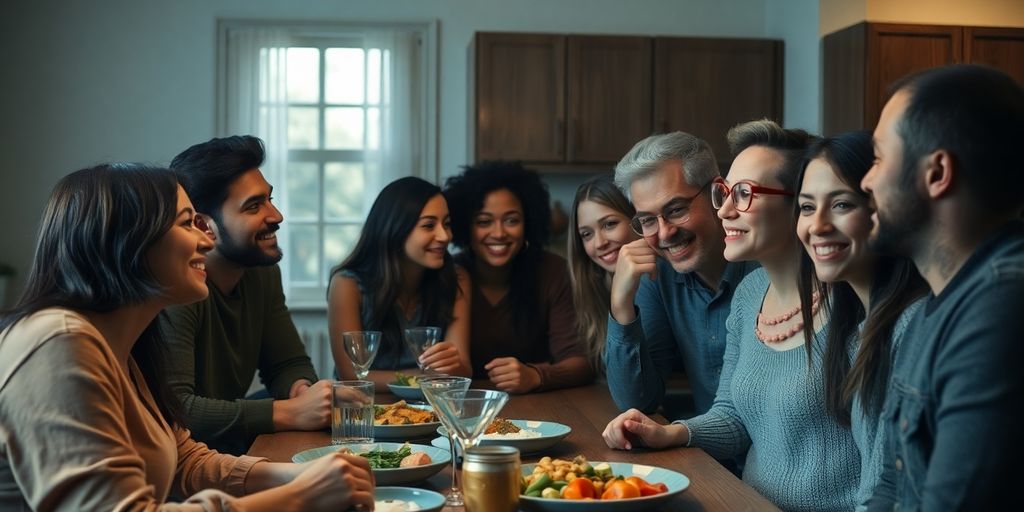
Kitchen table polyamory is a specific style of ethical non-monogamy where all partners involved, including metamours (your partner’s partners), feel comfortable enough to gather around the same kitchen table. It’s about building a supportive, friendly community rather than just a series of separate relationships. This means you might hang out with your husband’s other partners, or even go on double dates. It’s a big shift from the idea of keeping relationships compartmentalized. For me, this approach really helped solidify my own evolving relationship structures and identity. It’s not always easy, and it requires a lot of open communication, but the depth of connection it can create is pretty amazing.
My Husband’s Identity and Pronouns
My husband, Eli, has always been a pretty steady presence in my life, but even his identity has seen growth and exploration alongside our polyamorous journey. He uses he/him pronouns, and while that hasn’t changed, his comfort and openness in discussing his gender and how it intersects with his relationships have deepened. Understanding and respecting his identity, just as I expect my own queerness to be respected, is a core part of our dynamic. It’s about seeing the whole person, not just their role in a relationship structure.
Navigating Attraction and Dislike Towards Men
As I’ve leaned more into my queer identity, I’ve noticed shifts in my attractions, and that includes my feelings towards men. Before polyamory, my attractions felt more straightforward. Now, I find myself attracted to people regardless of gender, which aligns with pansexuality, but I also have moments where I feel a distinct lack of attraction or even a dislike towards certain men. This isn’t about rejecting masculinity, but rather about recognizing that my attractions are complex and not always consistent. It’s okay to have preferences and to not be attracted to everyone, even within a queer framework. This personal exploration has been a significant part of understanding my own identity beyond simple labels. It’s a reminder that queerness is a broad spectrum, and my experience is valid within it. Learning to embrace these nuances has been freeing, allowing me to define my own path in polyamorous relationships.
Moving Forward
So, yeah, it’s been a journey. Figuring out my queer identity and how that fits with polyamory hasn’t always been easy, and honestly, I’m still learning. There were times I felt like I had to justify one with the other, which is pretty wild when you think about it. But I’m starting to see that they’re just parts of who I am, not things that need defending. It’s about embracing all of it, the messy bits and the good bits, and just living authentically. It’s not about having all the answers, but about being open to finding them as I go.
Frequently Asked Questions
What exactly is polyamory?
Polyamory means having more than one romantic relationship at the same time, with everyone involved knowing and agreeing. It’s about being open and honest about feelings and connections with multiple people.
What does it mean to have a queer identity?
A queer identity is a broad term for anyone who doesn’t identify as straight or cisgender. It’s about embracing all parts of yourself, including your attractions and how you feel about gender, even if it doesn’t fit traditional ideas.
How can polyamory help someone understand their queer identity?
Sometimes, exploring polyamory can help people realize they aren’t strictly attracted to one gender. This lack of a single ‘type’ of person they’re attracted to is often a big part of understanding a queer identity.
Isn’t it hard to go against what society expects for relationships?
It can be tough when society tells you relationships should only be between two people. Embracing polyamory and a queer identity means challenging those old ideas and choosing what feels true and right for you.
What is imposter syndrome in this context?
Feeling like you don’t quite fit in, even within the polyamorous or queer communities, is called imposter syndrome. It’s normal to feel this way when you’re figuring out who you are and how you want to live.
What is ‘Kitchen Table Polyamory’?
Kitchen Table Polyamory is when everyone involved in a polyamorous setup (partners, their partners, etc.) can comfortably hang out together, like sitting around a kitchen table. It focuses on building a community and friendship among everyone.
Unleashed & Unapologetic – Where Queer Joy Meets Limitless Connection
Your identity is beautiful, your pleasure is valid, and your journey is worth celebrating. Step into a vibrant community where queer love, open relationships, and authentic self-expression are embraced without limits. You deserve a space that welcomes every part of you. Sign up for a free SwingTowns account today and start connecting with others who celebrate you exactly as you are.
“Really enjoying Swingtowns a lot! Very easy to use the app and lots of great people too.” -KarandBri1970