
The Rise of Ambiamory: Redefining What It Means to Be Relationship-Fluid
Lately, there’s been a lot of talk about different ways people do relationships. You might have heard terms like monogamy, which is the usual one partner thing, or polyamory, where people have multiple partners. But there’s another idea popping up more and more: ambiamory. It’s kind of like being flexible with your relationship style. Some people are finding that they don’t always fit neatly into just one box, and that’s okay. This article, ‘The Rise of Ambiamory: Why More People Identify as Relationship-Fluid,’ is going to explore what that means and why it’s becoming more common.
Key Takeaways
- Ambiamory is about being open to or comfortable with both monogamous and non-monogamous relationship structures, rather than strictly preferring one.
- Many people are questioning the traditional idea that one person must be ‘the one’ and are exploring relationship styles that feel more authentic to them.
- Ethical non-monogamy, including ambiamory, relies heavily on open communication, clear boundaries, and managing feelings like jealousy.
- Identifying as ambiamorous can be a personal journey focused on autonomy and self-acceptance, separate from seeking external approval.
- As society becomes more open, the definition of what a ‘successful’ or ‘valid’ relationship looks like is broadening to include more fluid and personalized approaches.
Understanding The Rise of Ambiamory: Why More People Identify as Relationship-Fluid
Defining Ambiamory: Beyond Monogamy and Polyamory
So, what’s this ambiamory thing everyone’s starting to talk about? It’s not quite monogamy, and it’s not exactly polyamory either. Think of it as being open to either structure. Some people might be happily monogamous for a while, then later find themselves in a polyamorous setup, and then maybe back to monogamy again. It’s about not being locked into one way of relating. The key here is flexibility and the freedom to choose what feels right at any given time. It’s less about a fixed identity and more about a fluid approach to love and connection. Understanding ambiamory dynamics means recognizing that people aren’t always one thing or the other, forever.
The Spectrum of Non-Monogamy
When we talk about relationships that aren’t strictly monogamous, it’s really a wide spectrum. It’s not just polyamory (having multiple romantic partners) or open relationships (often focused on sexual connections outside the primary partnership). There’s also relationship anarchy, where people reject hierarchical structures altogether. Ambiamory fits into this broader picture by acknowledging that someone might move between different points on this spectrum. It’s like saying you enjoy different kinds of music; you might love classical one day and rock the next, and that’s perfectly fine.
Here’s a quick look at some points on the non-monogamy spectrum:
- Monogamy: Exclusive romantic and sexual relationship with one partner.
- Monogamish: Primarily monogamous, but with occasional exceptions for sexual encounters.
- Open Relationship: A primary couple agrees to allow outside sexual relationships, often with emotional exclusivity maintained.
- Polyamory: Having multiple romantic and/or sexual relationships simultaneously, with the knowledge and consent of all involved.
- Relationship Anarchy: Rejection of relationship hierarchies and rules, with each relationship defined by the individuals involved.
Ambiamory can encompass moving between any of these, or simply being comfortable with the possibility of doing so.
Challenging Traditional Relationship Norms
For a long time, the idea of a single, lifelong romantic partner has been the default. It’s what we see in movies, read in books, and often, what’s expected by society. But as more people explore their feelings and desires, they’re realizing that this one-size-fits-all approach doesn’t work for everyone. Ambiamory is part of this larger shift. It questions the idea that you have to pick one relationship style and stick with it forever. It’s about saying that love and commitment can look different, and that’s okay. It’s a move away from external expectations and towards personal truth in relationships.
Navigating the Nuances of Ethical Non-Monogamy
Communication as the Cornerstone of ENM
Okay, so you’re thinking about or already exploring relationships that aren’t strictly one-on-one. That’s cool, but it also means you’ve got to get really good at talking. Like, really good. Open and honest communication isn’t just a nice-to-have; it’s the absolute bedrock of ethical non-monogamy (ENM). Without it, things can get messy fast. It’s about making sure everyone involved feels heard, understood, and respected, no matter what kind of relationship structure you’re building.
Think of it like this:
- Regular Check-ins: Schedule time to talk about how everyone is feeling, what’s working, and what’s not. Don’t wait for a problem to pop up.
- Active Listening: Really hear what your partner(s) are saying, not just waiting for your turn to speak. Ask clarifying questions.
- Honesty About Feelings: This includes the good, the bad, and the uncomfortable. Sharing your emotions, even when it’s tough, builds trust.
- Discussing Expectations: What does ENM mean to each person? What are the boundaries? What are the hopes?
“This is an amazing place to explore and experience. The best online platform for swinging.” -Decentfinder
Addressing Jealousy and Insecurity
Let’s be real, jealousy can pop up even in the most solid relationships, and ENM is no different. Some people think that if you’re doing ENM right, jealousy just disappears. That’s not really how it works. Jealousy is a normal human emotion. The difference in ENM is how you deal with it. Instead of letting it fester or using it as a weapon, you learn to see it as a signal. It might be pointing to an unmet need, a fear, or an insecurity that needs attention. It’s a chance for self-reflection and for your partner(s) to offer support. Learning to manage these feelings is a big part of navigating non-monogamy with grace.
Setting Boundaries in Fluid Relationships
Boundaries are super important in any relationship, but in fluid or non-monogamous ones, they’re like the traffic signals of your connections. They keep things moving safely and prevent collisions. These aren’t rigid walls, though; they’re more like guidelines that everyone agrees on. They can cover all sorts of things, from how much time you spend with other partners to what kind of information you share. It’s a good idea to have a conversation about what feels comfortable for everyone involved.
Here are some common areas where boundaries are set:
- Time Allocation: How much time is dedicated to each relationship?
- Information Sharing: What details about other relationships are you comfortable sharing or hearing?
- Safe Sex Practices: What are the agreed-upon rules for sexual health with all partners?
- Meeting New People: Are there specific ways you prefer to meet new partners or introduce them?
It’s also key to remember that boundaries can change. What works today might not work next month. So, being flexible and willing to revisit these agreements is just as vital as setting them in the first place.
The Personal Journeys of Ambiamorous Individuals
Autonomy Over External Approval
Lots of people who identify as ambiamorous find that their journey is really about figuring out what they want, not what everyone else thinks they should want. It’s like, you grow up hearing about the one true love, the soulmate, the forever-and-always kind of thing. And then, maybe you realize that doesn’t quite fit. Or maybe it does, sometimes. The big thing is owning that flexibility. It’s about saying, ‘Hey, I get to decide what my relationships look like, and it’s okay if that changes or looks different from yours.’ This isn’t about being confused; it’s about being honest with yourself. True autonomy means choosing your own path, even when it’s not the most popular one.
Embracing Individuality in Love
When you’re ambiamorous, you’re not just picking a relationship style and sticking with it forever. You’re embracing the idea that you can be happy in different kinds of connections. Maybe one day you’re perfectly content with a single, deep partnership, and the next, you might feel drawn to exploring multiple romantic connections. It’s about recognizing that your capacity for love and connection isn’t limited to one box. It’s about honoring your feelings and desires as they evolve. This often means letting go of the pressure to have everything figured out perfectly. It’s a process, and that’s totally fine.
The Role of Self-Care and Emotional Well-being
Navigating what is ambiamorous identity can be a lot. You’re often challenging deeply ingrained ideas about relationships, and that can bring up all sorts of feelings – for yourself and from others. Because of this, taking care of yourself becomes super important. It’s not just about bubble baths and face masks, though those can help! It’s more about making sure you’re checking in with your own emotions, setting boundaries that protect your energy, and having a support system. This could be friends, a therapist, or even online communities where people understand what you’re going through. When you prioritize your well-being, you’re better equipped to handle the ups and downs of any relationship style you choose.
“I am enjoying swingtown and the way it is run. Hope to meet some great people who enjoy healthy sexy fun together. Life is tooo short not to.” -teaser71902
Here are some habits that many ambiamorous individuals find helpful:
- Regular Self-Reflection: Taking time to think about your feelings, needs, and desires in your relationships. What’s working? What isn’t? What do you want more of?
- Open Communication: Practicing honest and direct conversations with partners about expectations, boundaries, and feelings. This is key, no matter the relationship structure.
- Building a Strong Support Network: Connecting with people who understand and accept your relationship choices, whether they are friends, family, or online communities.
- Prioritizing Emotional Health: Actively working on managing jealousy, insecurity, and other challenging emotions that can arise in any relationship dynamic.
Societal Perceptions and Misconceptions

It feels like everywhere you look, relationships are supposed to fit into neat little boxes. Monogamy is the default, the one everyone understands and, for the most part, accepts without question. When people step outside that box, especially with something like ambiamory or other forms of ethical non-monogamy (ENM), it can bring up a lot of confusion and, frankly, judgment. Many people struggle to grasp that love and commitment can exist in more than one form. It’s like they’ve been given a script for how relationships should work, and anything deviating from it is seen as wrong or unstable.
Debunking Common Polyamory Myths
There are so many ideas floating around about polyamory and related relationship styles that just aren’t true. For instance, a big one is that polyamory means you’re just greedy or can’t commit. That’s not it at all. It’s more about having the capacity for multiple deep connections, not about collecting people. Another myth is that it’s all about sex, and that emotional intimacy isn’t important. For many, the emotional bonds are the most significant part. Then there’s the idea that if you’re polyamorous, you must be unhappy in monogamy. Not true! People choose these paths for all sorts of reasons, often because it genuinely fits their needs better.
Here are some common misconceptions:
- Myth: Polyamory is just cheating with extra steps.
- Reality: Ethical non-monogamy is built on honesty and consent from everyone involved.
- Myth: People in polyamorous relationships are always jealous.
- Reality: Jealousy can happen, but it’s often addressed openly and used as a chance for growth, not a relationship ender.
- Myth: Polyamory is a phase or a sign of confusion.
- Reality: For many, it’s a stable and fulfilling relationship structure that aligns with their values.
The Stigma Surrounding Non-Traditional Relationships
Because these relationship styles are less common, they often carry a stigma. People might assume you’re confused, selfish, or going through something. It can be tough when you feel like you have to constantly explain or defend your choices. This societal pressure can make it hard for people to be open about their relationships, leading to secrecy and isolation. It’s a shame because, at its heart, ethical non-monogamy is about communication and respect, just like any healthy relationship. The goal is often to find a way to love that honors individual needs, rather than forcing everyone into a single mold. This can lead to more fulfilling connections for everyone involved.
“Really enjoying Swingtowns a lot! Very easy to use the app and lots of great people too.” -KarandBri1970
Building a More Inclusive Understanding of Love
Ultimately, the goal is to move towards a society that accepts a wider range of relationship structures. It’s about recognizing that love isn’t one-size-fits-all. Whether someone is monogamous, polyamorous, ambiamorous, or something else entirely, the focus should be on whether the relationships are healthy, consensual, and bring happiness to those involved. We need to get better at celebrating the diversity of human connection and understanding that different paths can lead to equally valid and fulfilling relationships. It’s about making space for everyone to define their own happiness and build relationships that work for them, free from judgment. Learning about different relationship styles, like those found in the polyamory community, can help broaden our perspectives.
Exploring Different Models of Non-Monogamy

Polyamory vs. Open Relationships
When we talk about non-monogamous relationship trends, it’s easy to lump everything together. But there’s actually a lot of variety. Polyamory and open relationships are two common terms, but they mean different things. Think of it like this: polyamory is about having multiple loving, committed relationships simultaneously, where everyone involved knows and consents. It’s often about deep emotional connections with more than one person. Open relationships, on the other hand, usually involve a primary couple who agree they can have sexual relationships with other people, but often remain emotionally exclusive to each other. It’s not always about finding deep love with everyone; sometimes it’s more about shared experiences or fulfilling specific needs.
- Polyamory: Focuses on multiple loving, committed relationships with full knowledge and consent from all parties.
- Open Relationships: Typically involves a primary couple allowing sexual connections with others, while often maintaining emotional exclusivity.
It’s important to remember that these are just broad categories, and people often blend or adapt them to fit their unique situations. The key is always communication and consent.
Relationship Anarchy and Its Principles
Relationship anarchy (RA) is a bit different. Instead of following traditional relationship hierarchies (like prioritizing a romantic partner over friends), RA suggests that all relationships should be treated as unique and equal. There are no set rules or expectations based on the type of relationship. You build each connection from the ground up, based on what works for the people involved. It’s about autonomy and not letting societal norms dictate how you love or connect with others.
“I’ve been looking for a fun community who share the same interests as I do, and most have failed to meet my expectations. But SwingTowns by far has had the most fun engagements with REAL people, much more than anywhere else I’ve found. Most people on here have been fun, sexy, engaging, and willing to help a young buck learn the ropes of this lifestyle.” -Johncarpenter
The Variety Within Polyamorous Structures
Even within polyamamy, there’s a huge range. Some people practice what’s called kitchen table polyamory, where everyone involved knows each other and can comfortably hang out together, like at a family dinner. Then there’s parallel polyamory, where partners might have separate lives and social circles with their other partners, with less overlap. Some polyamorous people might have a hierarchical structure, where one relationship is considered primary, while others are secondary. Others prefer a non-hierarchical approach, where all relationships are seen as equally important. The beauty of these different structures is that they allow people to tailor their relationships to their own needs and desires, moving away from a one-size-fits-all approach to love. You can explore more about ethical non-monogamy here.
Here’s a quick look at some common structures:
| Structure Type | Description |
|---|---|
| Kitchen Table Poly | All partners know each other and can interact comfortably. |
| Parallel Poly | Partners have separate relationships and social circles. |
| Hierarchical Poly | Relationships are ranked by importance (e.g., primary, secondary). |
| Non-Hierarchical Poly | All relationships are considered equally important. |
The Future of Relationships: Embracing Fluidity
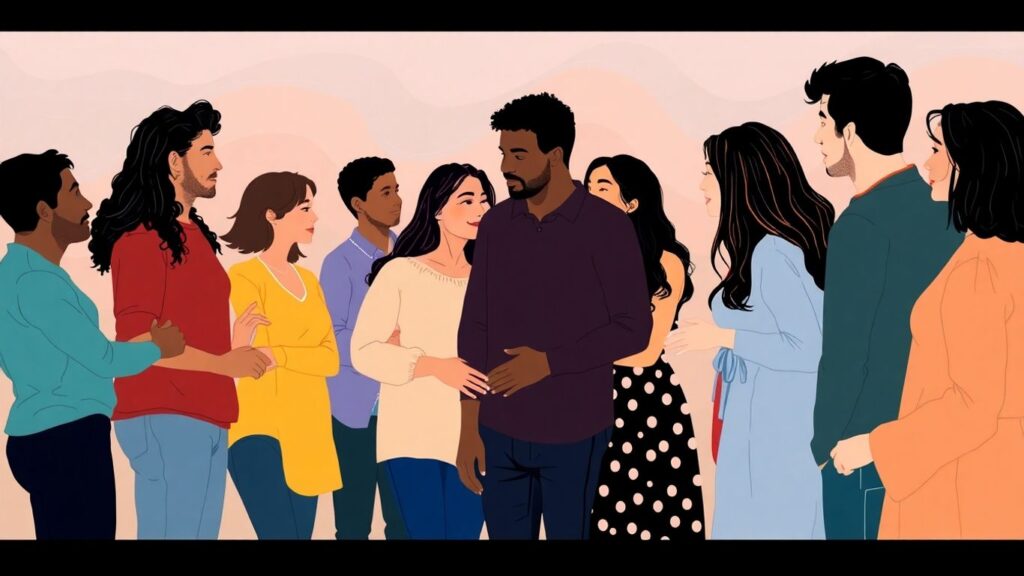
Lessons Learned from Polyamory
Polyamory has really opened up conversations about what relationships can look like. It’s shown us that love isn’t a zero-sum game and that multiple people can bring different kinds of joy and support into our lives. We’re learning that commitment doesn’t have to mean exclusivity. It’s more about being honest and present with everyone involved. This shift is helping people move away from rigid expectations and towards something more adaptable.
The Evolving Definition of Commitment
Commitment is changing, and that’s okay. It’s less about a lifelong promise to one person and more about showing up for the people you care about in ways that work for everyone. This means being clear about what you can offer and what you need. It’s about building trust through consistent action and open communication, no matter the structure.
Finding Fulfillment in Diverse Relationship Styles
People are realizing that there’s no one-size-fits-all approach to love. Whether you’re exploring relationship fluidity or finding happiness in a more traditional setup, the goal is genuine connection and personal growth. The key is being honest with yourself and others about your desires and boundaries. This journey involves a lot of self-reflection and a willingness to adapt as you learn more about yourself and what makes you happy. It’s all about exploring relationship fluidity in a way that feels authentic to you. This also means a lot of attention to navigating consent in fluid relationships, making sure everyone feels respected and heard at every step.
Moving Forward, Together (or Apart)
So, what does all this mean for the future of relationships? It seems like more and more people are realizing that the old rules don’t always fit. Whether you’re leaning towards ambiamory, exploring polyamory, or sticking with monogamy, the big takeaway is that honesty and communication are key. It’s okay to question what works for you and to build a relationship that feels right, even if it looks different from what society expects. The most important thing is finding a connection where everyone feels seen, respected, and happy. The relationship landscape is changing, and that’s not a bad thing.
Frequently Asked Questions
What exactly is ambiamory?
Ambiamory is a way of thinking about relationships where someone is open to being happy in either a monogamous relationship (with just one partner) or a non-monogamous relationship (with more than one partner). It’s like being flexible with your relationship style, choosing what feels right at the time.
Is ambiamory the same as being confused about relationships?
Not at all! Some people might think it means someone is unsure, but ambiamory is actually about having the freedom to choose what works best. It’s not about being confused, but about recognizing that different relationship setups can be fulfilling.
How is ambiamory different from polyamory?
Polyamory is specifically about having multiple romantic relationships at the same time, with everyone’s knowledge and agreement. Ambiamory is broader; it means you’re okay with either having just one partner OR multiple partners. An ambiamorous person might be polyamorous sometimes, or monogamous other times.
Do ambiamorous people experience jealousy?
Yes, jealousy can happen in any type of relationship, including ambiamorous ones. The key is how people handle it. Ambiamorous individuals, like those in ethical non-monogamy, often focus on talking openly about their feelings and understanding the root of the jealousy, rather than seeing it as a sign that the relationship should end.
Is it hard to explain ambiamory to others?
It can be, because many people are used to thinking of relationships as strictly one way or the other (monogamous or polyamorous). Explaining that you’re comfortable with either can sometimes surprise people. It helps to focus on the idea of flexibility and personal choice in love.
Why are more people identifying as relationship-fluid or ambiamorous now?
More people are questioning traditional ideas about love and relationships. With more information available and open conversations happening online and in real life, individuals are realizing they don’t have to fit into a single box. They’re embracing the idea that relationships can be diverse and change over time to fit their needs and happiness.
The Rise of Ambiamory – Redefining Relationship Fluidity
Ambiamory is changing how people understand love and commitment, offering space to shift naturally between monogamy and polyamory. It’s about honoring what feels right for you in each chapter of life. Sign up for a free SwingTowns account today and explore a community that celebrates flexible, authentic relationships.
“Swing Towns knows what’s up! Finally a platform where like minded people can connect.” -Cboy6983