Pride & Beyond: Celebrating Polyamorous & Pansexual Identities
Pride events have grown a lot over the years, starting as a way for LGBTQIA+ folks to fight for their rights and find community. These days, Pride is a big tent, trying to include more and more people. This article looks at how polyamorous and pansexual people fit into all of this. We’ll talk about what these identities mean, how Pride has changed, and the ongoing conversations about who belongs and how we can all support each other.
Key Takeaways
- Polyamory is a relationship choice, not a sexual orientation, but it still seeks acceptance.
- Pansexuality is a sexual orientation that finds a lot of support and visibility at Pride.
- Pride started as a protest for queer liberation and has become more inclusive over time.
- There’s an ongoing discussion about polyamory’s place in Pride, with some seeing it as an ally movement and others questioning its fit.
- New research suggests that non-monogamy might be a type of “relational wiring,” which could change how we think about its inclusion in Pride in the future.
Understanding Polyamory and Pansexuality
Defining Polyamory as a Relationship Style
So, what’s the deal with polyamory? It’s more than just “open relationships.” Polyamory is about having multiple loving, intimate relationships with the full knowledge and consent of everyone involved. It’s about honesty, communication, and building connections with more than one person. It’s not about cheating or sneaking around; it’s about openly and ethically practicing non-monogamy. There are many ways to do it, and it looks different for everyone. Some people have a primary partner and then secondary partners, while others practice relationship anarchy, where all relationships are treated equally. It’s all about what works for the people involved.
- Open communication is key.
- Consent is mandatory.
- Honesty builds trust.
“This is the best site we have found! Easy to navigate and easy to make great long lasting memories and friends!” -julwil8182
Pansexuality as a Sexual Orientation
Pansexuality is a sexual orientation characterized by attraction to people regardless of their gender. It’s not the same as bisexuality, which is often defined as attraction to both men and women. Pansexuality acknowledges that gender is a spectrum and that attraction can exist beyond the binary. It’s about seeing the person, not just their gender. For pansexual individuals, gender is not a limiting factor in who they are attracted to. They might be attracted to men, women, non-binary people, genderfluid people, and anyone else. It’s a broad and inclusive orientation that celebrates the diversity of human identity.
- Attraction regardless of gender.
- Recognizing the gender spectrum.
- Focus on the individual.
Distinguishing Between Identity and Relationship Choice
It’s important to distinguish between sexual orientation and relationship style. Pansexuality is a sexual orientation, meaning it describes who you are attracted to. Polyamory, on the other hand, is a relationship style, meaning it describes how you choose to structure your relationships. You can be pansexual and monogamous, pansexual and polyamorous, or any other combination. One is about who you love, and the other is about how you love. Confusing the two can lead to misunderstandings and invalidate people’s experiences. It’s crucial to recognize that these are separate aspects of identity and choice.
- Orientation vs. relationship structure.
- Pansexuality is about attraction.
- Polyamory is about relationship style.
The Historical Context of Pride Celebrations
Roots in LGBTQIA+ Liberation
Pride isn’t just a party; it’s a powerful statement rooted in resistance. The first Pride events commemorated the Stonewall Riots, a series of spontaneous demonstrations by members of the LGBTQIA+ community in response to a police raid that began in the early morning hours of June 28, 1969, at the Stonewall Inn in New York City. These riots are widely considered a turning point in the fight for LGBTQIA+ rights in the United States and around the world. The bravery of those who stood up against oppression laid the foundation for the Pride celebrations we know today. The Stonewall Inn is now a national monument.
Evolution of Pride’s Inclusivity
Over the years, Pride has evolved from a protest into a multifaceted celebration. Initially focused on gay and lesbian rights, it has expanded to include bisexual, transgender, queer, intersex, asexual, and other marginalized identities. This evolution reflects a growing awareness of the diversity within the LGBTQIA+ community and a commitment to inclusivity. However, this expansion hasn’t always been smooth, with ongoing debates about who is included and how their voices are represented. It’s a continuous process of learning and adapting to better serve the needs of all members of the community.
Pride as a Space for Marginalized Identities
Pride serves as a vital space for marginalized identities within the LGBTQIA+ community. It offers a platform for visibility, advocacy, and community building. For many, Pride is one of the few times a year they feel truly seen and accepted. It’s a chance to connect with others who share similar experiences, find support, and celebrate their identities without fear of judgment. The importance of this space cannot be overstated, especially for those who face discrimination and marginalization in their daily lives.
“Great community in here!!! Lots of beautiful people. Swingtowns has helped connect with so many new friends, love it!!!!” -2x2more
Here are some ways Pride supports marginalized identities:
- Providing a platform for visibility and representation.
- Creating safe spaces for community building and support.
- Advocating for policy changes and social justice.
Debating Polyamory’s Place in Pride
Arguments for Inclusion and Visibility
Many people in polyamorous relationships feel Pride events should include them. They argue that polyamory, like other LGBTQIA+ identities, faces discrimination and misunderstanding. Visibility at Pride can help normalize polyamory and educate the public. It’s about showing that diverse relationship styles are valid and deserve respect. Some believe that relational identity is just as important as sexual or gender identity. Pride offers a platform to advocate for legal recognition and social acceptance, which are often lacking for polyamorous relationships.
Concerns About Co-Opting Queer Spaces
Not everyone agrees that polyamory belongs at Pride. Some members of the LGBTQIA+ community worry that including polyamory could co-opt spaces specifically created for sexual and gender minorities. Their argument is that Pride originated as a protest against oppression faced by LGBTQIA+ individuals, and polyamory, as a relationship structure, doesn’t necessarily experience the same kind of systemic discrimination. There’s a fear that diluting the focus could diminish the importance of Pride for those it was originally intended to serve. It’s a complex issue with deep historical roots, and understanding the origins of Pride flags is key.
Navigating Different Perspectives on Belonging
Finding common ground requires open dialogue and empathy. It’s important to acknowledge the different experiences and perspectives within both the LGBTQIA+ and polyamorous communities. Some polyamorous individuals identify as queer themselves, further blurring the lines. Others see polyamory as a choice, not an inherent identity, which complicates the question of belonging. Ultimately, creating a truly inclusive Pride means addressing these nuances and working towards mutual understanding. It involves:
- Listening to diverse voices.
- Acknowledging historical contexts.
- Finding areas of shared advocacy.
“Swingtown is so great in am having so much fun and it’s the best site to visit and enjoy. The people are so friendly.” -JS12
Celebrating Pansexual Identities at Pride
Visibility and Affirmation for Pansexual Individuals
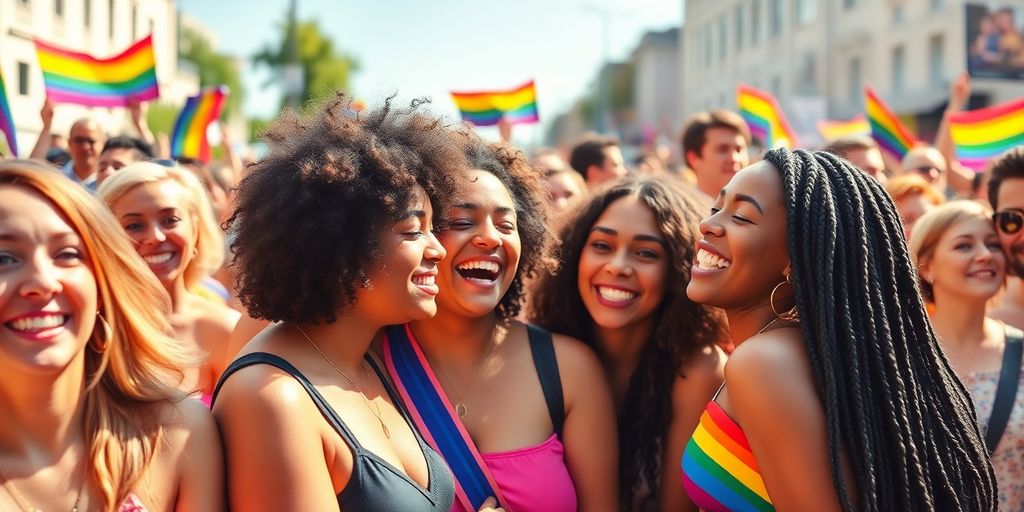
Pride events offer a crucial platform for pansexual individuals to gain visibility and affirmation. It’s a space where they can be seen, heard, and celebrated for who they are, without the pressure of fitting into rigid categories. Seeing pansexual flags, symbols, and community members at Pride can be incredibly validating, especially for those who may not have found acceptance elsewhere. It’s about creating a sense of belonging and showing that pansexual identities are a valued part of the broader LGBTQ+ community. Pride provides a counter-narrative to the erasure and misunderstanding that pansexuals often face.
Addressing Unique Challenges Faced by Pansexuals
Pansexual individuals often encounter specific challenges, such as:
- Erasure: The misconception that pansexuality is “bisexuality with extra steps” or simply a trend.
- Stereotypes: Being falsely labeled as hypersexual or confused about their sexuality.
- Lack of Representation: Limited visibility in media and even within LGBTQ+ spaces.
Pride events can actively combat these issues by:
- Providing educational resources about pansexuality.
- Featuring pansexual speakers and performers.
- Creating safe spaces for pansexual individuals to connect and share their experiences.
“We are very excited to have joined Swing Towns. We have already chatted and met some fun people. We look forward to meeting many more friends and having a great time making new connections.” –
IzzyBlossomKatee
Pansexuality’s Role in the Broader Queer Community
Pansexuality enriches the queer community by:
- Expanding the understanding of attraction beyond the gender binary.
- Promoting inclusivity and acceptance of diverse identities.
- Challenging heteronormative assumptions about relationships and sexuality.
The inclusion of pansexual voices and perspectives strengthens the entire LGBTQ+ movement, fostering a more nuanced and accepting environment for everyone. Pansexual inclusion in Pride parades and other events demonstrates a commitment to celebrating diverse sexualities at Pride and ensuring pansexual representation in LGBTQ+ events.
Polyamorous Communities as Allies at Pride

Participating as Supportive Allies
Polyamorous individuals and groups can show up at Pride as allies, offering support and solidarity to the broader LGBTQIA+ community. This means actively listening to the concerns and experiences of queer individuals, participating in events, and showing up in ways that amplify queer voices. It’s about understanding that while polyamory touches on relationship structures, Pride’s core is about sexual orientation and gender identity. Showing up as allies means respecting the space and centering the experiences of LGBTQIA+ individuals.
Advocating for Relational Rights
While Pride is primarily focused on LGBTQIA+ rights, there’s room to advocate for relational rights in a way that complements and supports the existing movement. This could involve raising awareness about legal protections for polyamorous families, fighting against discrimination based on relationship structure, and promoting the idea that all forms of consensual relationships deserve respect and recognition. It’s a delicate balance, ensuring that these efforts don’t overshadow the primary focus of Pride.
Building Bridges with the LGBTQIA+ Movement
Building strong relationships between polyamorous communities and the LGBTQIA+ movement is key. This involves open communication, mutual support, and a willingness to learn from each other’s experiences. It’s about recognizing shared struggles against discrimination and working together to create a more inclusive and accepting society. This can be achieved through collaborative events, educational initiatives, and ongoing dialogue. The goal is to foster a sense of community and solidarity, recognizing that both groups can benefit from working together. This helps increase polyamory visibility at Pride and strengthens the overall message of inclusivity.
“I recommend swingtowns because it’s the first site that even as a free profile you can still connect with ppl. I have since upgraded to lifetime but me and my wife have met some really fun cpls since we started on this site so we fully recommend swingtowns.” -TheRowan
Here are some ways polyamorous communities can participate in Pride events:
- Marching in the parade with ally groups.
- Hosting educational workshops about ethical non-monogamy.
- Volunteering at Pride events.
- Creating Pride events for polyamorous community members and allies.
The Concept of Relational Wiring and Pride
Exploring Non-Monogamy as a Potential Orientation
Is it possible that how we’re wired to connect romantically and sexually isn’t always a choice? The idea of relational wiring suggests that for some, non-monogamy isn’t just a preference, but a fundamental aspect of their identity. This perspective challenges traditional views and opens up new avenues for understanding diverse relationship styles. It’s not about shirking responsibility in relationships, but recognizing that different people have different needs and capacities for connection. It’s about what you need, what your partner needs, and where those needs overlap. This overlap is where you explore engaging in a relationship.
Kinsey Institute’s Emerging Research
The Kinsey Institute has been at the forefront of studying human sexuality for decades, and their emerging research is starting to explore the complexities of non-monogamy. While definitive conclusions are still years away, preliminary findings suggest a biological component to relational preferences. This research could help destigmatize non-monogamous relationships and provide a stronger foundation for understanding the diversity of human connection. It’s important to remember that research is ongoing, and we should approach these topics with sensitivity and an open mind. Consider supporting LGBTQ+ events to show your support.
Future Considerations for Pride Inclusion
As Pride celebrations evolve, it’s important to consider how to create truly inclusive spaces for individuals with diverse relational orientations. This means moving beyond tolerance to genuine acceptance and understanding. Pride can be a platform for advocating for relational rights, challenging societal norms, and fostering open dialogue about different ways of loving and connecting. It also means addressing concerns about co-opting queer spaces and ensuring that all voices are heard and respected.
“I am enjoying swingtown and the way it is run. Hope to meet some great people who enjoy healthy sexy fun together. Life is tooo short not to.” -teaser71902
Here are some ways to promote inclusion:
- Educational workshops on ethical non-monogamy
- Panels featuring diverse voices from the polyamorous community
- Safe spaces for discussing relational experiences
Fostering Acceptance and Understanding
Shifting Public Perception of Polyamory
Changing how people see polyamory starts with education and visibility. It’s about showing that these relationships aren’t just about sex, but about love, commitment, and family in different forms. We need more stories in the media that portray polyamorous relationships in a positive and realistic light. This can help break down stereotypes and show the public that these relationships can be just as healthy and fulfilling as monogamous ones.
“This is an amazing place to explore and experience. The best online platform for swinging.” -Decentfinder
Promoting Ethical Non-Monogamy
Ethical non-monogamy (ENM) is all about honesty, communication, and consent. It’s not just about having multiple partners; it’s about doing it in a way that respects everyone involved. Here are some key aspects:
- Consent: Everyone involved must freely and enthusiastically agree to the arrangement.
- Communication: Open and honest conversations are essential for navigating the complexities of multiple relationships.
- Respect: Treating all partners with kindness, consideration, and empathy is crucial.
By focusing on these principles, we can show that ENM isn’t about cheating or irresponsibility, but about building relationships based on trust and mutual understanding.
The Importance of Open Dialogue and Compassion
Creating safe spaces for open dialogue is key to fostering acceptance. This means having conversations with friends, family, and even strangers about polyamory and pansexuality. It’s about listening to their concerns, answering their questions, and sharing our own experiences. Compassion is also essential. Not everyone will understand or agree with our choices, and that’s okay. What matters is that we approach these conversations with empathy and a willingness to learn from each other. Remember, understanding is a journey, not a destination.
Wrapping Things Up
So, when we look at everything, it’s pretty clear that Pride events are super important for polyamorous and pansexual people. They give folks a place to be themselves, find others like them, and just feel good about who they are. It’s not just about big parades, you know? It’s also about those smaller moments, the quiet conversations, and the feeling of being part of something bigger. These events really help make sure everyone feels seen and accepted, which is a huge deal. They remind us that love and identity come in all sorts of shapes and sizes, and that’s something worth celebrating, always.
Frequently Asked Questions
What is polyamory?
Polyamory means having loving, open relationships with more than one person, with everyone knowing and agreeing. It’s a way of having relationships, not something you’re born with, like being gay or straight.
What does pansexual mean?
Pansexuality means you can be attracted to people no matter their gender. It’s about loving someone for who they are inside, not what gender they identify as.
Why do we have Pride celebrations?
Pride started as a protest for LGBTQIA+ rights. It’s a time to celebrate who you are and fight for equal rights. Over time, it has grown to include many different parts of the queer community.
Should polyamory be included in Pride?
Some people think polyamory should be part of Pride because polyamorous people also face challenges and need to be seen and accepted. Others feel Pride should stick to sexual and gender identities, as polyamory is a relationship choice, not an identity you’re born with.
Are pansexual people part of Pride?
Pansexual people are definitely part of the LGBTQIA+ community and are celebrated at Pride. It’s important for them to feel seen and supported, just like everyone else.
How do polyamorous communities participate in Pride?
Polyamorous groups often join Pride events to show their support for the LGBTQIA+ community. They act as friends and helpers, working together for everyone’s rights and understanding.
Celebrate Boldly – Where Pride Meets Endless Possibilities
Your identity deserves to shine every day, not just during Pride. Join a vibrant community where love, exploration, and authentic connections thrive all year long. Sign up for your free SwingTowns account today and start building meaningful connections that celebrate every part of who you are.
“So far it’s been a fun way to connect with like minded people. In a open, judgement free environment. Lots of people to get to know.” -StaggerinVixen86